I was seventy-one years old the morning I bought ten acres of swamp for ten dollars.
Not ten thousand.
Ten.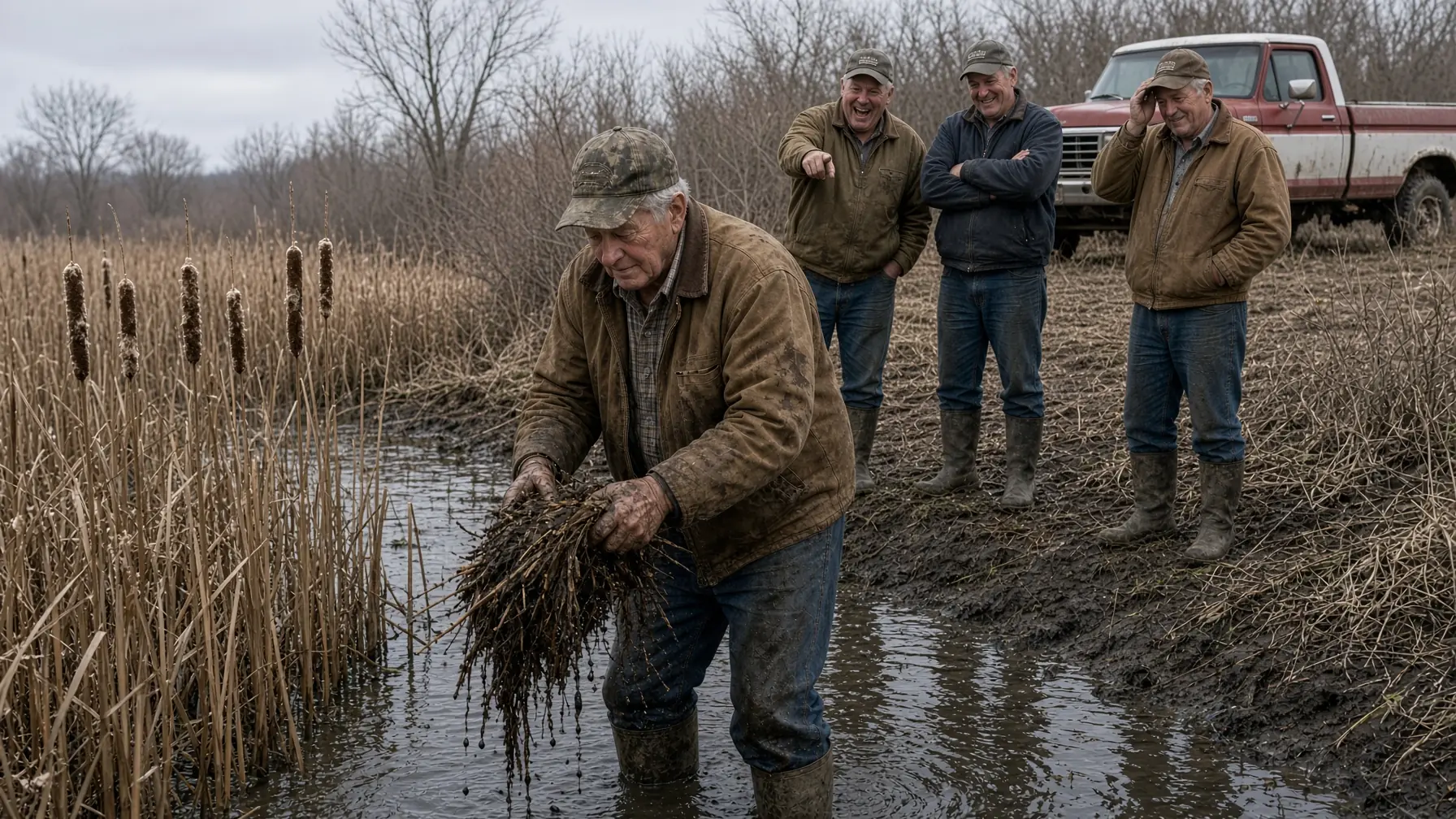
One bill.
The county auction was held on a Tuesday in late March of 1998.
Cold enough that Harlan Voss, the auctioneer, had to keep rubbing his hands together between properties.
There were maybe thirty people standing around the courthouse lot.
Farmers.
Dealers.
Land speculators.
Men who had survived the farm crisis of the eighties and learned never to romanticize land.
When Lot 17 came up, Harlan barely looked at his sheet.
“Ten acres, Wapello County.”
“Two miles south of Ottumwa.”
“Standing water.”
“Cattails.”
“Washed-out access track.”
“No drainage.”
“County tax seizure.”
He looked around.
“Five dollars.”
Nobody raised a hand.
Someone laughed.
Harlan waited.
“Three?”
Still nothing.
Seed dealer named Pritchard stood near the back with his hands in his coat pockets.
He called:
“You pay us three and maybe somebody takes it.”
The men around him laughed.
Harlan smiled.
Then I raised my hand.
“Ten.”
That quieted them.
Harlan looked at me.
“Ten dollars?”
“Yes.”
“Howard, you understand I said swamp?”
“Yes.”
Pritchard turned.
He looked at me the way people look at an old dog that has begun walking toward traffic.
Harlan glanced around once more.
“Ten dollars.”
“Going once.”
Nobody moved.
“Twice.”
Pritchard shook his head.
Harlan brought down the hammer.
“Sold to Howard Hope.”
“For ten dollars.”
I paid cash.
Signed the deed against the hood of my 1979 Ford F-250.
Two hundred forty thousand miles.
Driver’s door only opened from the inside.
Pritchard walked past me toward his Suburban.
“Howard.”
I folded the deed into my jacket.
“What?”
“What in God’s name are you going to do with a swamp?”
The two men beside him smiled.
I looked at the ten-dollar deed.
Then at Pritchard.
“Guess I’ll find out.”
They laughed.
I did too.
Because at that moment, I genuinely did not know.
The property looked worse in person.
The access road was barely a road.
Frozen ruts.
Standing water.
Willow scrub growing through the middle.
I left the Ford near County Road 14 and walked.
Twenty minutes to reach the center.
Every step sank through thin ice into black mud.
Cattails everywhere.
Tall brown stalks.
Old seed heads moving in the wind.
Willows along the higher edges.
The place smelled like decomposing vegetation, wet soil, and something mineral underneath.
Most farmers would have looked around and confirmed the auction price.
Ten dollars.
Maybe too much.
I looked around and thought about my father.
Not because the place reminded me of him.
Because of something he told me when I was twelve.
My father grew up poor.
Not the kind of poor people use when they mean money was tight.
Depression poor.
His father—my grandfather—would take whatever work appeared.
In the winter of 1936, he spent three weeks helping drain a marsh outside Ottumwa.
Fifty cents a day.
The property owner wanted pasture.
So my grandfather and a crew cut channels, pulled vegetation, moved mud, and tried to make wet land act like dry land.
At the end of the job, my grandfather filled a burlap sack with thick roots he had been pulling from the cattails.
Pale yellow beneath the black mud.
Some nearly as long as his forearm.
He brought them home.
My grandmother boiled them.
Salt pork.
A little salt.
That was dinner.
More than once.
My father remembered the roots as mildly sweet.
Starchy.
Something between a turnip and a potato.
When I was twelve, he took me into a marsh and showed me how to find them.
“Most people see weeds.”
He pushed his hand into the mud.
Then pulled up a thick segmented root.
“But people forget what a thing is useful for when they stop needing it.”
At twelve, I thought that was just another old-person sentence.
At seventy-one, standing in ten acres of cattails nobody wanted, I finally understood.
I bent down.
Grabbed one stalk near the base.
Pulled.
Mud resisted.
Then released.
A thick root came up.
I wiped it against my coat.
Pale cream underneath.
I pulled another.
Then another.
In fifteen minutes, I had a dozen lying on the ice.
I cut a small piece.
Bit into it raw.
Fibrous.
Starchy.
Faint sweetness.