The white dump truck had already emptied nearly two tons of smoked brisket trimmings into Marlene Tate's work yard when Rick Doherty raised his hand and ordered the driver to stop.
The hydraulic bed remained angled against the October sky, its steel floor gleaming through a thick layer of pale fat caps. A few slabs slid another foot and settled against the open tailgate. The pile below the truck stood higher than Marlene's waist, mottled cream and brown, with ribbons of smoke-darkened meat running through it. A sweet, heavy smell had spread between the wooden fence and the converted milk house, overpowering the usual scents of cut grass, hot dust, and the neighboring pastures.
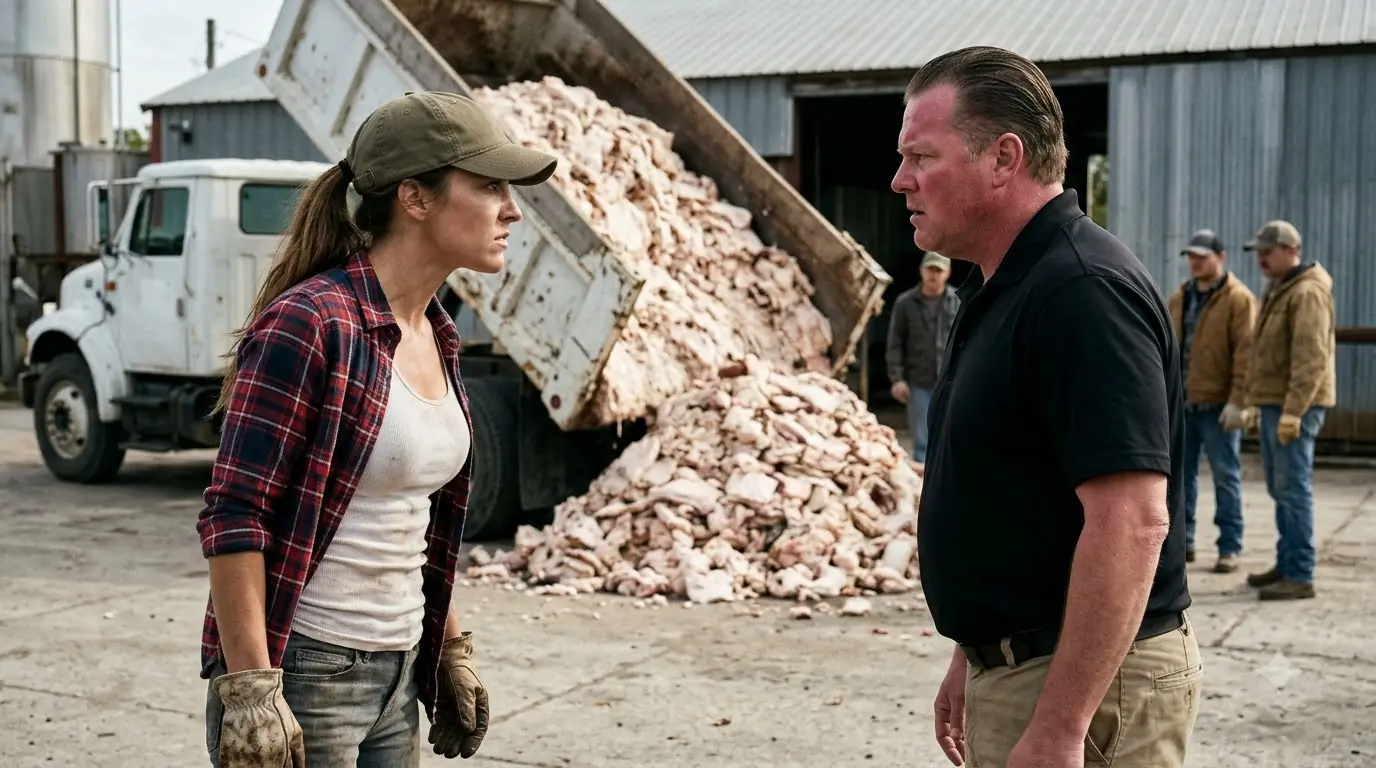
Rick stepped between Marlene and the truck with a clean white invoice in his hand.
Marlene kept her thick ledger open across both gloved palms. Fourteen columns of pit numbers, delivered weights, and yield percentages filled the pages in her tight handwriting. She had recorded the truck's arrival time, the driver's seal number, the gross scale reading, and the weight already discharged. She had not yet written the last line because she had expected the bed to finish emptying.
The driver leaned toward his open window, waiting for Rick's signal. He looked uncomfortable about the interruption, but he kept his hands on the steering wheel.
Rick smiled. It was a broad, deliberate smile that did not reach his eyes.
“Free is over,” he said. “Pay fifty-five cents a pound, or I dump this load somewhere else.”
Marlene looked at him rather than the invoice. Behind his shoulder the raised truck bed shivered slightly as the hydraulic system held it in place. A ribbon of fat crept down the edge of the pile and folded over itself.
“You waited until I needed the final shipment,” she said.
“Exactly.” Rick laid the invoice over her handwritten calculations, pressing the paper down with his palm. “Pay me—or watch your little farm die.”
For a moment the yard was quiet except for the low diesel engine, the click of the hydraulic pump, and the dry October wind catching the corners of the pages beneath his hand.
Marlene did not lower the ledger. She looked at the price, at the units beside it, then at the long number in the total column. She turned back one page, compared two rows, then turned another and traced the yields from fourteen smokehouse locations. Her finger stopped by four pit numbers.
Rick's smile held for another second.
Then he noticed where she was looking.
It was the first time that morning she had seen uncertainty enter his face.
Three months earlier, Marlene would have been terrified by an invoice like that. Six months earlier, she might have mistaken the offer of free deliveries for a kindness. A year earlier, she would not have known why fourteen lines of waste from fourteen different pits could tell four completely different stories. Nothing in the polished yard that morning explained how a thirty-one-year-old farmer had reached the point where a smokehouse operations manager believed a stopped dump truck could bankrupt her.
The answer began with a milk house nobody wanted, forty acres outside Luling, and a father who had taught Marlene to keep records even when recording the truth was more discouraging than forgetting it.