Jack Reynolds knew about the plan before his wife ever poured him that beer.
That was the part Kayla never understood.
She thought she was being careful. 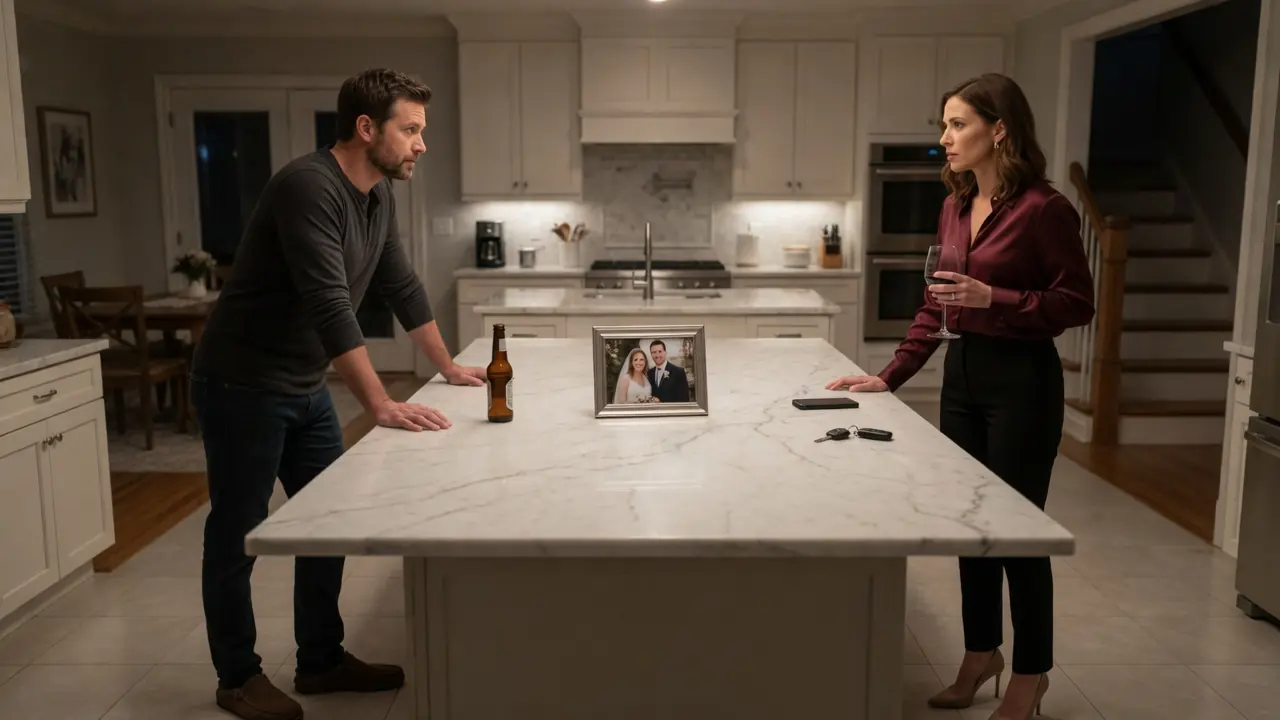
She thought she was whispering in corners, deleting messages, laughing softly behind closed office doors, and hiding behind the advice of a friend who called herself wise because she had already destroyed more than one marriage and survived the wreckage by calling it liberation.
But secrets have a strange way of looking for honest people.
And one honest person had found Jack.
Her name was Denise Porter, and she worked in accounting with Kayla. She was not close to Jack. They had only met twice at company picnics, and both times she had shaken his hand politely before returning to the shade with her husband and children.
Denise was not dramatic.
She was not the type of woman who enjoyed being involved in other people’s private pain. She wore simple blouses, kept her hair pinned neatly, packed her own lunch, and left the office at 5:05 every day unless payroll forced her to stay late. She remembered birthdays, corrected invoices, and quietly bought extra school supplies each August because she knew one of the warehouse workers had three children and not enough money.
Denise had a conscience.
That was the problem.
For three weeks, she had been hearing things she wished she could unhear.
It started in the break room.
Kayla and Mary Morgan would stand near the coffee machine, speaking in voices low enough to feel private but careless enough to carry. Mary had been coaching Kayla, teaching her how to “take control” of her marriage. At first, Denise assumed it was just the usual office gossip, the kind people regretted after lunch.
Then the names started.
Josh.
Larry.
The club on Friday.
The storage room.
The way Mary laughed when she said Jack would “fall in line.”
By the third week, Denise could no longer pretend she did not know what was happening.
The final straw came on a Wednesday afternoon.
Denise had gone into the supply room for printer paper and heard Mary’s voice through the thin wall.
“You don’t ask him, Kayla. That’s where women make mistakes. You inform him. Men like Jack need structure. Give him rules and he’ll adjust.”
Kayla laughed nervously.
“What if he leaves?”
Mary snorted.
“Jack? Please. That man worships you. He’ll pout for a week, maybe sleep in the spare room, then he’ll come crawling back because he’s terrified of losing you. Use that.”
Denise stood frozen with one hand on a box of paper.
Then Kayla said something Denise would remember word for word.
“I just want to have a little freedom before we have kids. Once I’m a mother, that part of my life is over.”
Mary’s answer came fast.
“Exactly. Get it out of your system now. Jack doesn’t have to like it. He just has to accept it.”
Denise left the supply room without the paper.
For the rest of the afternoon, she could not focus. Numbers blurred. Emails sat unanswered. Her coffee went cold beside her keyboard. She kept thinking about Jack Reynolds at the summer picnic two years earlier, standing by the grill with his sleeves rolled up, helping Kayla carry plates even though she had laughed and told everyone he was “too helpful for his own good.”
Denise remembered the way he looked at his wife.
Not possessively.
Not foolishly.
With quiet pride.
The kind of look a person gives when he still believes the life beside him is worth protecting.
By 5:30, Denise was sitting in her car in the office parking lot with Jack’s number pulled from an employee emergency contact sheet she had no business using for personal reasons.
She stared at the number for ten minutes.
Then she called.
He did not answer at first because he did not recognize the number. She left a voicemail, short and tense.
“Mr. Reynolds, this is Denise Porter. I work with your wife. I’m sorry to bother you, but there is something you need to know. Please call me back when you are alone.”
Jack listened to the message twice.
Then he sat in his truck outside a hardware store for nearly ten minutes before calling her back.
Denise answered on the first ring.
“Mr. Reynolds?”
“This is Jack.”
His voice was calm.
Too calm, maybe.
Denise gripped the steering wheel with her free hand.
“I’m sorry. I know this is inappropriate.”
“Why did you call?”
The question was direct but not harsh.
Denise closed her eyes.
Then she told him.
She did not soften it.
She told him what she had heard. She told him Mary had been pushing Kayla into something that would break their marriage. She told him Kayla planned to bring it up after dinner that Thursday night. She told him there were coworkers involved, and she believed some of it had already crossed the line at work.
Jack listened without interrupting.
That was the first thing Denise noticed.
He did not yell.
He did not curse.
He did not ask if she was lying.
When she finished, the line stayed quiet for several seconds.
Then Jack said, “Thank you for telling me.”
Denise’s voice trembled.
“I’m sorry.”
“You didn’t do it,” Jack said. “You just told the truth.”
That sentence nearly made Denise cry.
Because truth, she was learning, was sometimes the heaviest thing a person could hand to another human being.
That evening, Jack sat alone in the garage long after dark.
The half-finished cabinet he had been building for Kayla stood against the wall. It was supposed to be a surprise for their anniversary. She had once said she wanted a place to store old letters, photographs, and little keepsakes from their life together.
Jack had remembered.
He always remembered.
He had chosen walnut because Kayla loved darker wood. He had spent four weekends sanding the boards smooth, cutting the joints carefully, testing the hinges, and imagining her face when she saw it finished. The cabinet was not fancy in the way store-bought furniture could be fancy. It was better than that. It was built with time.
Now he looked at it and felt nothing.
Not rage.
Not yet.
Just a cold, hollow clarity.
He loved Kayla.
That was the cruelest part.
He loved the way she sang off-key while cooking. He loved the way she rested one foot over his ankle when they watched television. He loved the way she cried at animal rescue videos and pretended she had allergies. He loved the way she used to fall asleep with one hand under her cheek, peaceful as if marriage had made the world safe.
He loved the woman he had married.
But he was beginning to understand that the woman planning this dinner conversation was not the same one.
Or maybe she had been changing for a long time, and he had been too trusting to notice.
Jack and Kayla had been married for six years.
They had met at a backyard birthday party thrown by one of Jack’s cousins, a casual summer gathering with folding chairs, paper plates, and children running through sprinklers. Kayla had been twenty-seven then, bright-eyed and funny, working her first serious office job, full of plans she had not yet organized into disappointments.
Jack was thirty-two, already working as a finish carpenter, already known among friends as the kind of man who fixed things without making speeches about it.
The first thing Kayla noticed about him was his hands.
They were strong, careful hands.
Hands with small scars across the knuckles.
Hands that looked like they knew how to build something that would last.
He noticed her laugh.
That was what he told her later, and it was true.
Kayla had laughed that afternoon with her head tilted back, one hand against her chest, sunlight touching the side of her face. Jack remembered thinking that some people made noise and some people made rooms feel warmer.
Kayla had made the room feel warmer.
Their early marriage had been simple in the way hard work can be simple when two people are facing the same direction. They rented a small house first, then saved for a down payment. Jack took extra custom cabinet jobs. Kayla worked late to earn a promotion. They ate cheap dinners, painted rooms themselves, argued about curtains, and celebrated small victories like adults who still believed effort was always rewarded.
When they bought the house, Kayla cried on the empty living room floor.
“This is ours,” she whispered.
Jack sat beside her and kissed her hand.
“Yeah,” he said. “It is.”
For a while, that was enough.
Then enough began to feel smaller to Kayla.
It did not happen all at once.
That would have been easier.
It happened in phrases.
“You’re too practical.”
“We never do anything wild.”
“Everyone else has stories.”
“I don’t want to wake up at forty and feel like I missed something.”
Jack tried to answer those sentences with solutions.
Trips.
Date nights.
More spontaneity.
A weekend cabin.
A concert in another city.
A new restaurant neither of them could really afford.
But Kayla’s restlessness was not about where they went.
It was about who she had begun imagining she might have been without him.
Mary Morgan fed that imagination like kindling.
Mary was forty-two, twice divorced, loud, stylish, and endlessly convinced that her experience made her a mentor instead of a warning. She wore bright lipstick, expensive perfume, and the expression of a woman who treated every relationship as a contest she intended to win.
At first, Kayla called her “a lot.”
Then “fun.”
Then “honest.”
Then “the only person who really understands.”
Jack had disliked Mary from the beginning, though he tried not to show it. She had a way of smiling at him that made him feel inspected and dismissed in the same breath.
At a company Christmas party, Mary once looked around Jack and Kayla’s living room and said, “You two are very domestic.”
Kayla laughed.
Jack heard the insult.
A year later, Kayla was repeating Mary’s sentences as if they were original thoughts.
Women give too much.
Marriage should not mean ownership.
A husband who truly loves you should not be threatened by your freedom.
Jack tried to talk to her about it.
Kayla called him insecure.
He tried again.
She called him old-fashioned.
He tried a third time.
She said, “This is exactly why I can’t tell you things.”
So he stopped trying as often.
That was how distance grew.
Not with one slammed door.
With hundreds of small moments when speaking began to cost more than silence.
After Denise’s call, Jack sat in the garage and saw those moments arranged behind him like a trail he had refused to follow.
At 11:30 that night, he called a lawyer.
He did not expect anyone to answer.
Someone did.
Her name was Patricia Rowe, a family attorney recommended years earlier by a customer who had gone through a difficult divorce. Jack had kept the number in his contacts without ever believing he would need it.
Patricia listened while Jack explained the situation.
When he finished, she said, “Do not threaten. Do not assault anyone. Do not destroy shared property. Document everything. If she states her intentions, make your refusal clear. Calmly.”
“I’m not sure I can stay calm.”
“You can be angry later,” Patricia said. “Tonight and tomorrow, you need to be smart.”
Then he called a private investigator.
Then he called his sister, Angela, who lived two counties away and had a guest apartment above her detached garage.
“Can I stay there for a while?” he asked.
Angela did not ask many questions.
She had always been the kind of woman who understood when not to push.
“Bring what you need,” she said. “The place is empty.”
By Thursday evening, Jack already had a plan.
He came home at his usual time.
Kayla met him at the door with a kiss on the cheek and a smile that was almost too bright. The house smelled like roast chicken, garlic potatoes, and the apple cake he loved.
His favorite dinner.
Of course.
Jack looked at her face and felt something inside him fold quietly in half.
“I love you,” she said.
“I love you too,” he answered.
He meant it.
That made it worse.
Dinner was pleasant.
That was the strange thing about betrayal. It did not always arrive with shouting, broken glass, or obvious danger. Sometimes it sat across from you in soft candlelight, asking about your day while already planning where your heart would be placed after it was removed.
Kayla talked about work.
Jack told her about a difficult cabinet installation at a client’s home. She laughed at the right moments. He smiled when he was supposed to. She poured him a second glass of water, brushed crumbs from the table, and looked so much like the woman he loved that for one dangerous second, he wanted to forget what Denise had told him.
Maybe Denise misunderstood.
Maybe Kayla would not say it.
Maybe the woman in front of him would choose the marriage before forcing him to choose himself.
Then dinner ended.
Kayla insisted he sit in the living room with a beer while she cleaned the kitchen.
“You worked all day,” she said. “Relax for once.”
Jack took the beer.
His hands did not shake.
He sat in his chair and listened to the dishwasher run.
A few minutes later, Kayla came into the living room with a glass of wine. She sat on the sofa across from him, not beside him.
That told him everything.
“Jack,” she said gently, “honey, we need to talk.”
Jack leaned back.
“Sure. About what?”
Kayla took a deep breath, the way someone does before stepping onto a stage.
“I know this might be hard for you to accept at first,” she began, “but I need you to hear me out. I’ve been thinking about my happiness, and I think there are some things I need to experience before we settle down and have children.”
Jack nodded slowly.
“What things?”
Kayla seemed encouraged by his calm.
“Well,” she said, “I need freedom for a while. Just a little while. A couple of months, maybe. I want to explore. Meet people. Have experiences. Then I can come back to us fully, ready to be the best wife and mother I can be.”
Jack looked at the beer bottle in his hand.
Then he looked at her.
“By experiences, you mean other men.”
Kayla blinked.
Then she nodded.
“Yes. But only physically. Emotionally, you’re the only man I love.”
Jack almost laughed.
Not because it was funny.
Because it was such a carefully polished sentence, and he could hear Mary’s fingerprints all over it.
“I see,” he said.
Kayla leaned forward.
“I know it sounds strange right now, but this could actually make us stronger. Mary says—”
“Mary says?”
Kayla hesitated.
Jack raised an eyebrow.
“She has experience with this kind of thing,” Kayla said carefully. “She helped me understand that marriage doesn’t have to be old-fashioned. You love me, Jack. I know you do. And if you truly love me, you’ll want me to be happy.”
There it was.
The trap hidden inside a soft voice.
If you love me, you will let me hurt you.
Jack set the beer bottle down.
“I do love you,” he said. “That’s why I’m going to be very clear. I don’t agree to this. If you are asking for my consent, the answer is no.”
Kayla’s face tightened.
“But you won’t stop me?”
“You’re an adult,” Jack said. “I can’t stop you from making your choices.”
Relief flashed across her face so quickly he almost missed it.
She mistook his restraint for surrender.
“So you understand?”
“No,” Jack said. “I understand that you’ve already decided.”
Kayla swallowed.
“It’s temporary.”
“That’s what you’re saying.”
“It is.”
Jack nodded once.
“Then we need practical details. Are you planning to move out?”
“No,” Kayla said quickly. “We’re married. We’ll keep living here. I might go out, or sometimes someone might come here. If that happens, you can sleep in the spare room.”
Jack looked at her for a long moment.
The woman he had built a life with had just assigned him a smaller room in his own home so she could bring strangers into their bed.
And she looked almost proud of how reasonable she was being.
“I won’t be sharing a bed with you while this is happening,” Jack said. “Not now. Not afterward. Not unless medical tests are done and unless I decide I even want to continue this marriage.”
Kayla flinched.
“That feels cold.”
“It is clear.”
She studied him, confused by the lack of explosion.
Mary had promised yelling.
Mary had promised resistance.
Mary had promised that after the storm, Jack would accept his new place.
But Jack was not storming.
He was leaving.
Only Kayla had not realized it yet.
“So,” Jack asked, “when does this start?”
Kayla lifted her chin.
“Tomorrow night. Mary and I are going to a club with Josh and Larry from work. Nothing might happen, but I need you to move into the spare room before I come home.”
Jack nodded.
“I’ll have my things moved out before you get back.”
Kayla smiled.
She actually smiled.
“Thank you, Jack. I know this is hard, but I think one day you’ll understand.”
Jack stood.
“I already do.”
He went upstairs while Kayla remained in the living room, sipping her wine as if she had just won the first round of a game.
By the next afternoon, Jack had packed everything that mattered.
Not into the spare room.
Into his truck.
Tools.
Clothes.
Personal documents.
His grandfather’s watch.
The framed photo of him with his father on a fishing pier.
His laptop.
His work contracts.
The small box of letters Kayla had written him before they were married.
He nearly left the letters behind.
Then he took them.
Not because he wanted to reread them.
Because he refused to let Kayla rewrite every part of their story as if only the ending had been true.
The anniversary cabinet, unfinished but still his, went into the back under a moving blanket.
He left behind the furniture they had bought together, the dishes, the television, the bed, and every decorative pillow Kayla had insisted made the house warmer.
He took the things that had roots.
At 7:15 p.m., Kayla stood in the bedroom wearing a red cocktail dress he had once bought her for their fifth anniversary.
“You like it?” she asked, turning slightly.
Jack looked at her.
The dress was beautiful.
The memory was ruined.
“You look ready,” he said.
She smiled.
“I might be late.”
“I know.”
“You don’t have to wait up.”
“I won’t.”
Kayla kissed his cheek and left.
Jack listened to her car pull out of the driveway.
Then he closed the last box, carried it to the truck, locked the house behind him, and drove away.
At 1:38 a.m., Kayla came home with Josh.
Jack knew because the private investigator had a camera across the street.
He did not watch the footage.
He only needed the timestamp.
By morning, Kayla discovered the spare room was empty.
Then the closet.
Then the garage.
Then the missing truck.
The first voicemail came at 9:43 a.m.
“Jack, where are you? This isn’t funny.”
The second came ten minutes later.
“Okay, I understand you’re upset. Please call me.”
By noon, her tone changed.
“Jack, don’t punish me like this. We need to talk.”
By evening, she was crying.
He did not answer.
By Monday, her number was blocked.
Mary told Kayla not to panic.
“He’s having a tantrum,” she said. “Don’t reward it. Let him crawl back.”
They were standing outside the office building, smoking cigarettes neither of them truly enjoyed but both used as a reason to whisper privately.
Kayla looked exhausted.
“He took his tools.”
“So?”
“He took the cabinet he was making.”
Mary rolled her eyes.
“Good. Let him play sad carpenter somewhere else.”
“You don’t understand. Jack doesn’t do things for attention.”
Mary exhaled smoke.
“All men do things for attention when they think they’re losing control.”
Kayla wanted to believe that.
So she did.
But when she went home that night and saw the empty garage again, belief took effort.
Jack was not crawling.
He was documenting.
For two weeks, Kayla lived inside a fantasy that grew thinner by the day.
She kept going out with Mary. She met Josh and Larry. She laughed too loudly at lunch. She pretended Jack’s silence proved he was processing things. She slept late on weekends and left wineglasses in the sink because there was no one there to quietly wash them before morning.
The house began changing without him.
Not physically.
Emotionally.
The thermostat stayed at whatever temperature she set it because Jack was not there to adjust it before bed. The porch light stayed off because Jack had always turned it on. The trash bins did not roll to the curb unless she remembered. A loose cabinet hinge in the kitchen stayed loose. The garage smelled less like sawdust every day.
At night, when the house was still and too large around her, she would stand in the doorway of the empty garage and stare at the clean rectangles on the floor where his tools used to be.
That was when fear first began to breathe.
On Friday morning, while Kayla stood near the coffee machine with Mary, Josh, and Larry, a woman in a navy suit walked into the office.
She had a leather folder under one arm and the calm expression of someone who did not care who liked her.
“Kayla Reynolds?” she asked.
Kayla frowned.
“Yes?”
“Mary Morgan? Josh Keller? Larry Barnes?”
They all looked at one another.
The woman handed each of them an envelope.
Then she took a small camera from her bag, snapped photographs, and smiled politely.
“You have been served.”
Kayla’s fingers went cold.
“What is this?”
“I’m paid to deliver, not explain,” the woman said.
Then she walked straight into their boss’s office and closed the door behind her.
Kayla opened the envelope.
Divorce petition.
Cause: adultery.
Attached were photographs, audio summaries, screenshots, witness statements, and a preliminary evidence list.
Her knees nearly gave out.
Across from her, Josh’s phone started ringing.
Then Larry’s.
Both men went pale.
Their wives had received packets too.
Mary ripped open her envelope and hissed, “No. No, no, no.”
Before anyone could speak, the boss’s door flew open.
“Adams, Morgan, Keller, Barnes. My office. Now.”
Everyone in the break room turned to stare.
Kayla walked with the others past rows of silent coworkers. Every step sounded too loud. The office that had felt so safe the day before now felt like a courtroom.
Their boss, Mr. Hanley, stood behind his desk holding a thick manila envelope.
His face was red, but his voice was controlled.
That made it worse.
“I have just been informed,” he said, “that this company is being named in a legal complaint involving repeated inappropriate conduct on company property, during business hours, by employees under my supervision.”
No one spoke.
Mr. Hanley slapped the envelope onto his desk.
“Do any of you want to deny that you used company time and company spaces for personal misconduct?”
Silence.
“Do any of you want to deny that the storage room was used for meetings that had nothing to do with inventory?”
Mary’s face drained of color.
Josh stared at the carpet.
Larry looked as if he might be sick.
Kayla could barely breathe.
Mr. Hanley pointed toward the door.
“Get out of my office. All of you. Do not leave the building. Do not delete anything. Do not touch company records. Human Resources and legal counsel are already involved.”
By noon, the entire company received an email.
All employees were required to retake the code of conduct course. Security checks would begin immediately. Cameras would be installed in storage rooms, copy rooms, and hallways. Personal use of company systems would be monitored. Any employee caught using work time for personal misconduct would face discipline after legal review.
The email did not name Kayla.
It did not need to.
By 12:05, everyone knew.
By 12:07, her inbox filled with furious messages.
Thanks for ruining the office.
Hope it was worth it.
Some of us actually come here to work.
By the end of the day, Kayla understood something Mary had never mentioned.
Consequences do not stay politely inside the room where the mistake happens.
They spread.
That evening, Kayla sat in her car outside the office and tried to call Jack again.
Blocked.
She tried from Mary’s phone.
Blocked.
From Josh’s phone, she stopped herself before pressing call.
Even now, some small surviving part of her knew that calling her husband from the phone of one of the men named in the divorce petition would be madness.
So she drove to his best friend’s house.
No truck.
Then his brother’s apartment.
No truck.
Then the old motel near the highway.
Nothing.
She called mutual friends. Some did not answer. Some laughed. Some said, “You should have thought about that earlier.” Others admitted they knew where Jack was but would never tell her.
By midnight, Kayla was sitting alone in the house she had believed she controlled.
The bedroom was still hers.
That was the first thing she had demanded.
But now it felt like a museum exhibit dedicated to stupidity.
The bed felt enormous.
The red dress lay over a chair like evidence.
The air smelled faintly of perfume, wine, and panic.
On Monday morning, she went to Jack’s workplace.
The receptionist looked up.
“Can I help you?”
“I’m here to see Jack Reynolds.”
The woman’s expression shifted.
“He’s away for two weeks.”
“Where?”
“I’m not authorized to share that.”
“Please. I’m his wife.”
The receptionist’s face went still.
“No,” she said quietly. “You’re the person he asked us not to assist.”
Kayla stepped back as if slapped.
That night, she wrote the email.
It took four hours.
She deleted excuses.
Then blame.
Then Mary’s name.
Then anything that sounded like performance.
At first, she wrote that she had been confused.
She deleted it.
Then she wrote that Mary had pressured her.
She deleted that too.
Then she wrote that Jack had become distant, that she had felt invisible, that she had needed something for herself before motherhood erased her identity.
She reread the sentence and felt sick.
It was not completely false.
That was what made it dangerous.
There had been restlessness. There had been fear. There had been parts of herself she had not known how to name.
But none of that explained asking her husband to move into the spare room so she could bring another man home.
At last, she sent Jack a message that was almost honest.
Jack,
I know I have no right to ask you for anything.
I know you warned me clearly, and I chose not to hear you.
I let Mary fill my head with ideas that sounded powerful because I was too selfish to understand they were cruel. I told myself I was seeking freedom, but what I really wanted was to take your loyalty for granted while I did whatever I wanted.
You did nothing wrong.
I broke our marriage.
I broke your trust.
I humiliated you in a way no apology can repair.
I am sorry.
Not because I got caught.
Not because the divorce papers arrived.
Because I finally see what I did.
I love you, but I understand that my love no longer gives me any claim on your life.
If you never want to speak to me again, I will accept it.
If there is any path to even one conversation, I will come honestly, without excuses.
Kayla.
She sent it.
Then she sat staring at the screen until sunrise.
Jack replied two days later.
Kayla,
I read your message.
I believe you are sorry.
I also believe you are sorry too late.
I will not meet privately. Anything related to the divorce can go through attorneys. Anything related to shared property can be documented in writing.
I hope you become better than the person who sat across from me that night.
But I will not be the place where you practice.
Jack.
Kayla read the final line again and again.
I will not be the place where you practice.
It hurt because it was fair.
The divorce took nine months.
The company investigation ended sooner.
Kayla, Mary, Josh, and Larry were terminated after the lawsuit settled. Josh and Larry’s marriages collapsed almost immediately. Their wives had more than enough evidence, and both men discovered quickly that charm did not help much in family court.
Mary’s life unraveled differently.
For years, people thought her husband, Harold, was weak. Quiet. Passive. A man who nodded while Mary strutted through life as if consequences were for other people.
But Harold had been quiet for a reason.
He had been gathering everything.
Bank records.
Messages.
Photos.
Witness statements.
By the time Mary realized he was leaving, he had already separated his finances, secured his documents, and filed first.
He did not destroy her.
He simply removed himself completely.
That was enough.
Mary called Kayla once from a blocked number.
“You ruined everything,” she said.
Kayla sat in her small rented car outside the lawyer’s office, listening to the woman who had called herself wise.
“No,” Kayla said softly. “You helped me ruin everything. There’s a difference.”
Mary laughed bitterly.
“Oh, now you’re moral?”
“No,” Kayla said. “Now I’m awake.”
She hung up and never spoke to Mary again.
Kayla moved into a small apartment near the train tracks.
At first, she hated it.
The walls were thin. The kitchen had one drawer that stuck. The heater clicked all night in winter, and the laundry room smelled of detergent and damp concrete. The living room was too small for the couch she had taken from the house, so she sold it and bought a used chair from a woman on Marketplace who said it came from a smoke-free home but had clearly lied.
But there was one thing the apartment gave her that the old house no longer could.
Silence.
Not the proud silence of control.
The honest silence of consequence.
She got another job eventually, not in management, not with the same salary, and not with coworkers who laughed at reckless things over coffee. The work was dull, but dull had become a mercy.
She attended counseling.
At first, she went because her lawyer suggested it might look good.
Then she kept going because one Tuesday afternoon, while sitting in a gray chair across from a therapist named Dr. Ellis, Kayla finally said out loud, “I didn’t want freedom. I wanted power.”
Dr. Ellis nodded.
“And why did power feel safer than love?”
Kayla did not answer that day.
But she came back the next week.
And the week after.
Over time, the truth became less dramatic and more painful.
Kayla had been afraid of becoming a mother because motherhood felt permanent. She had been afraid of permanence because permanence required trust. She had wanted Jack’s loyalty without offering her own vulnerability in return. She had mistaken his steadiness for something she could lean against forever, no matter how carelessly she struck it.
She had not been trapped in the marriage.
She had been terrified of being fully known inside it.
That realization did not save anything.
It simply made the ruins honest.
Two years passed.
Jack finished the cabinet.
Not for Kayla.
For himself.
He moved into a smaller house outside town with a workshop behind it. The cabinet stood in his living room, filled with things that still mattered: his father’s fishing photo, his grandfather’s watch, his sister’s children’s drawings, and one empty shelf.
Angela asked him once why he left the shelf empty.
Jack said, “For whatever comes next.”
He did not rush into love again.
But he did not close the door either.
He went to work. He built things. He had Sunday dinners with Angela and her family. He fixed a porch for an elderly neighbor and refused payment until she threatened to make him three casseroles a week. He learned that peace did not always arrive as happiness. Sometimes peace arrived as a quiet evening when no one lied to you.
Kayla saw him once at the grocery store.
It was raining outside. She was holding a basket with soup, paper towels, and a bag of oranges. He stood near the coffee aisle in a dark jacket, reading labels like a man who had nowhere urgent to be.
For a moment, she almost turned away.
Then he looked up.
Their eyes met.
The world did not stop.
No music played.
No apology appeared powerful enough to change anything.
Kayla walked over slowly.
“Hi, Jack.”
“Hi, Kayla.”
He looked well.
That hurt more than if he had looked broken.
“I’m glad you’re okay,” she said.
He studied her for a moment.
“I hope you are too.”
“I’m trying.”
He nodded.
“That’s good.”
There was a silence between them, but it was not the old silence. It no longer begged to be filled. It simply stood there, honest and impossible.
Kayla swallowed.
“I’m sorry,” she said.
“I know.”
“I mean it.”
“I know.”
That was all he gave her.
And somehow, it was more kindness than she deserved.
Jack paid for his coffee and left.
Kayla watched him walk through the automatic doors into the rain. He did not look back.
For the first time, she did not expect him to.
That night, Kayla returned to her apartment and opened a notebook from therapy.
On the first page, she had written months earlier:
What did I lose?
She had made a long list.
Marriage.
Home.
Job.
Friends.
Trust.
Respect.
Jack.
But that night, she turned to a clean page and wrote a different question.
What can I still become?
For once, she did not answer immediately.
She let the question breathe.
Then she wrote one sentence.
Someone who never again confuses love with permission to hurt another person.
Outside, rain tapped against the window. The apartment heater clicked. A train passed somewhere in the distance, low and steady.
Kayla sat alone at the little table, not forgiven, not restored, not rescued from what she had done.
But awake.
And sometimes being awake is the first honest punishment.
Sometimes it is also the first honest chance.
Years later, Jack would tell Angela that leaving that night had saved him from becoming someone he did not recognize.
Not because he hated Kayla.
Hatred would have been simpler.
He had left because he loved her enough to tell the truth, and loved himself enough not to stay after she rejected it.
That was the part people misunderstood.
Walking away was not always abandonment.
Sometimes walking away was the final act of respect a person could offer a marriage that had already been broken by someone else.
Kayla had asked for freedom.
Jack gave it to her.
Not the bright, reckless freedom Mary had promised, with clubs, laughter, and men who made selfishness feel glamorous.
He gave her the kind of freedom that arrived after consequence.
The freedom to sit alone with herself.
The freedom to become honest without an audience.
The freedom to understand, too late, that a loyal person is not a cage.
A loyal person is a home.
And when you invite strangers to walk through that home while the person who built it is still inside, you should not be surprised when you come back and find the rooms empty.
Jack Reynolds knew about the plan before his wife ever poured him that beer.
He listened.
He watched.
He gave her one clear answer.
No.
Then he packed what mattered, carried his unfinished cabinet into the truck, and left before she could turn his loyalty into a spare room.
Kayla thought he would fall in line.
Mary thought he would crawl back.
Josh and Larry thought the consequences would stay hidden.
They were all wrong.
Because Jack Reynolds was not weak.
He was simply quiet.
And quiet men, when they finally choose themselves, do not always slam doors.
Sometimes they close them softly.
Lock them behind them.
And never come back.