“I can’t bring you to Christmas. My ex is coming, and it will be awkward.”
My girlfriend told me that three days before Christmas, after I had bought thoughtful gifts for her parents and planned to propose.
So I left. Months later, she was spiraling because I had moved on with someone better suited to me.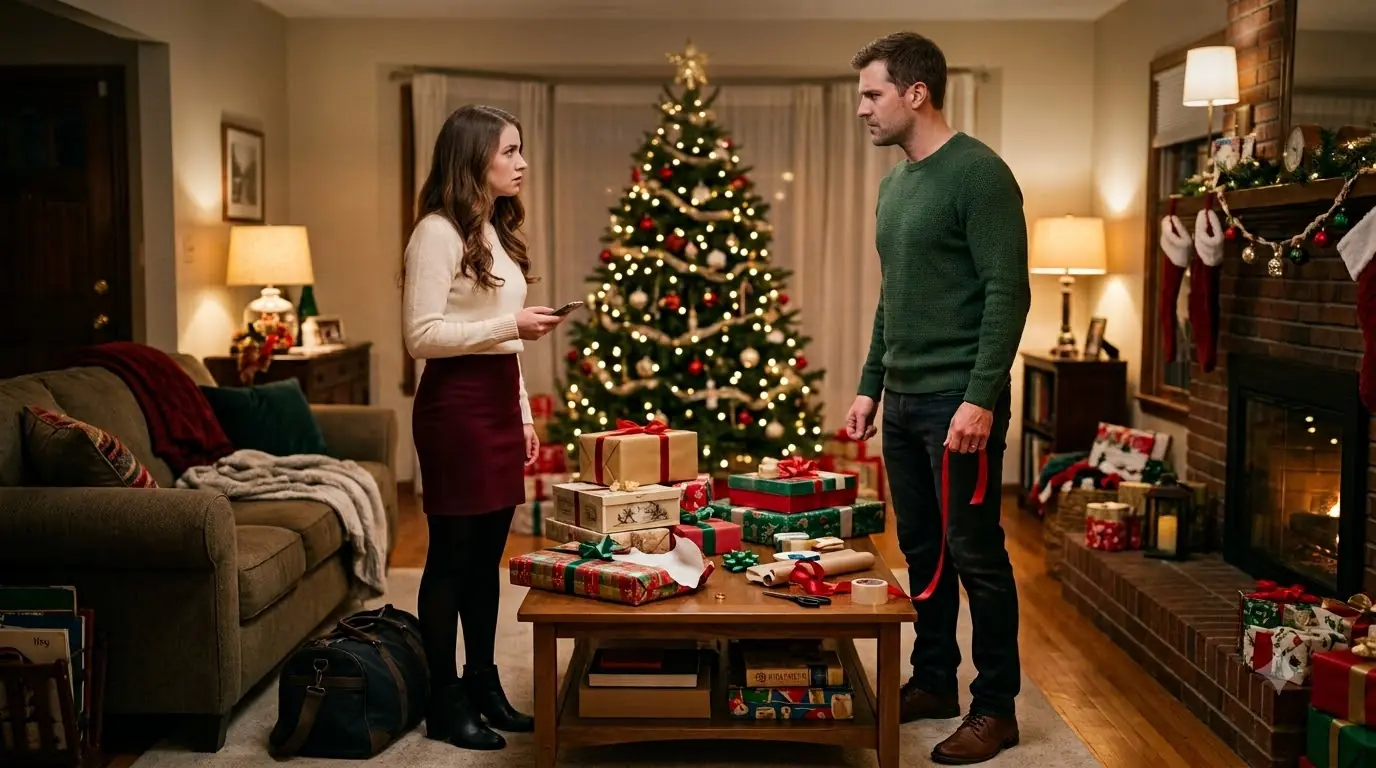
This happened at Christmas in 2022. I was twenty-seven, worked in project management for a midsize company in Ohio, and had lived in the same city since college. I had a decent job, my own place, and a Chevrolet Silverado that was fully paid off. It was not the most exciting life in the world, but it was stable, and I was comfortable with that.
The Silverado had been my first real adult purchase. I bought it used from a farmer who had treated it like his firstborn. It had only forty thousand miles and a spotless maintenance record, and I spent my first weekend installing a tonneau cover and upgrading the sound system because the factory speakers sounded like they were underwater.
After a string of relationships that had crashed because apparently being serious was worse than behaving like a man-child, I had mostly given up on dating. I focused on work, went to the gym, and spent my spare time restoring a 1987 Camaro I had found on Craigslist. Then my friend Jake hosted a barbecue in the summer of 2021, and I met Andrea.
She seemed like everything I had thought I wanted. She was an art teacher at a local elementary school, had a laugh that could stop traffic, and wore sundresses that somehow looked made for her. We clicked immediately. She said it was attractive that I had my life together, owned furniture that was not from a dorm room, and could plan a date without suggesting we split an appetizer at Applebee’s.
For once, somebody seemed to appreciate the responsible-adult part of me instead of calling it boring. Dating Andrea felt serious from the beginning. She talked about meeting my extended family, asked when my lease renewed, and joked that I would need a larger place when we moved in together.
She even showed interest in the Camaro project, which surprised me. Most women I had dated lost interest when I started talking about cars, but Andrea brought me coffee while I worked in the garage and asked what I was doing. Once, she helped me sand rust from the quarter panels while wearing old overalls she had borrowed from her mother.
Her parents loved me almost immediately. Her father, Steve, was a retired firefighter and an old-school kind of man. He taught me how to season cast iron properly and let me help rebuild the engine in his 1976 Corvette. We spent Sunday afternoons in his garage drinking Budweiser and talking about football, tools, work, and life.
Steve’s garage was automotive heaven. Every tool had a labeled place, the floor was spotless, and he had installed a proper lift so he could work underneath cars safely. His compressor could run pneumatic tools all day, and most of his heavy American-made tools had belonged to his father in the 1950s.
He taught me to rebuild carburetors and adjust valves while telling stories about fighting fires and raising children. Over time, he became almost like a second father to me. His wife, Grace, treated me like the son she had never had.
Grace always sent me home with leftovers. She texted links to articles she thought I would enjoy and asked for my opinion on everything from paint colors to which lawn mower Steve should buy. When Andrea and I visited for dinner, Grace sometimes shooed her own daughter away so she could show me her tomato plants or ask about my job.
Her vegetable garden was enormous and organized like a research project. Every row was labeled, and she kept charts tracking growth rates, watering schedules, and harvest dates. She quizzed me about soil pH and irrigation as though I were preparing for a final exam.
Grace began teaching me her canning methods and let me redesign the greenhouse layout using my project-management skills. She and Steve constantly told Andrea how lucky she was. Steve hinted at marriage, and Grace talked about how well their future grandchildren would be cared for.
I genuinely loved those people. By October 2022, I was ready to propose. I had a $7,500 ring hidden in my sock drawer and planned to ask Andrea during dessert at Christmas dinner, with both families there to celebrate afterward.
In November, I went into full Christmas-movie mode. My family had always taken holidays seriously, and because this was our first Christmas as a couple clearly heading toward engagement, I wanted it to matter. I began coordinating schedules in early November.
I reserved a table at The Refinery, a steakhouse Andrea had mentioned after seeing it on a food blogger’s Instagram. I had to call three times to secure a seven o’clock reservation on Christmas Eve, and I asked for their best table overlooking the city lights because I told them it was a special occasion.
Andrea had once said I looked good in green, so I bought a green sweater. I planned the timing of the gift exchanges so no one would feel rushed. I even worked out backup plans in case of snow, a lost reservation, or a last-minute change in either family’s schedule.
Then I went into detective mode for the gifts. During Thanksgiving dinner, Grace mentioned her grandmother’s china pattern exactly once and said she wished she could find a few missing pieces. I spent three weeks searching antique stores across two counties until I found four matching pieces.
Steve had casually mentioned a book about firefighting history during one dinner. I spent another week finding a first edition online. For Andrea, I had been saving for months to buy a professional Prismacolor Premier art set she had bookmarked but would never buy for herself.
The set had nearly two hundred pencils, brushes, and supplies and cost close to a thousand dollars. It was expensive, but I believed watching her face light up would make it worthwhile. Looking back, maybe I went too far, but planning was how I showed that I cared.
I noticed details. I remembered things people said. I tried to think ahead so that nothing important would fall apart.
The first warning came in early December when I showed Andrea the china pieces I had found for her mother. I arranged them on my kitchen table like a treasure hunter displaying a discovery. She barely looked away from her phone.
“Oh, yeah. That’s nice,” she said.
“Your mom is going to lose her mind when she sees these.”
“Mhm.”
She kept scrolling through Instagram. I told myself she was tired. Parent-teacher conferences, classroom parties, and holiday performances had been wearing her down, and teaching elementary school in December was basically herding children who had been filled with candy canes and Christmas excitement.
Then she began talking about Jensen, an old college friend who had moved back to town for a temporary job with a startup. At first, the references were harmless.
“Jensen thinks I should travel more.”
“Jensen says this town is too small for creative people.”
Soon, every conversation included him. Jensen thought she should take more risks with her art. Jensen believed small towns killed dreams. Jensen had stories from living in Chicago and traveling to six countries before turning thirty.
He apparently worked for a pretentious coffee company that sold artisanal blends to fashionable cafés. I pictured the kind of man who had aggressive opinions about pour-over techniques and owned more flannel shirts than a lumberjack.
Andrea kept praising his creative energy and saying she had never been anywhere outside Ohio. She became vague about where she was going and who she was seeing. During dinner, she spent more time on her phone than talking to me.
On December 15, I tried to confirm our Christmas schedule. She said, “Maybe we should keep things flexible this year.”
“Flexible how?”
“Just less structured. More spontaneous.”
The warning signs were everywhere, but I still blamed holiday stress. Three days before Christmas, the truth finally arrived.
I was in my living room doing the last of the gift wrapping. Everything was arranged by family member. Her parents’ gifts were in one pile, my family’s gifts were in another, and Andrea’s presents were front and center.
She walked in wearing the expression people use before saying, “We need to talk.” I assumed she wanted to adjust the schedule, leave an hour earlier, or change the order of the gift exchange.
“Sam, we need to talk.”
Then she sat on my couch and said, “I’m bringing Jensen to Christmas dinner instead of you.”
I stopped in the middle of wrapping. The ribbon slid from my hands. My brain could not process the sentence, so I asked her to repeat it.
“What did you just say?”
“I know this is terrible timing, but Jensen and I have been talking.” She took a shaky breath. “I don’t know how to say this without sounding awful.”
“You are off to a strong start. Try anyway.”
“Things between us feel so structured. It feels like we are following a predetermined blueprint instead of living. With Jensen, everything feels natural. Alive.”
I set down the gift I had been wrapping. Ironically, it was hers.
“Three days before Christmas, after I have been planning this for months?”
“I know it is cruel timing. I have been trying to find the right moment, but there never was one.”
Her voice cracked as though she were the person being injured.
“You put so much thought into everything,” she continued. “The gifts, the reservations, the way you remember every little thing my family says. It should make me feel loved, but it makes me feel trapped.”
“Trapped by someone caring about you?”
“Trapped by someone planning our entire future before I have even decided what I want it to look like. Jensen does not do that. He lives in the moment. He makes me feel like I can breathe.”
Then she told me she had found the ring.
“I saw the ring box in your drawer last week. I know what you were planning for Christmas dinner.”
“You went through my things?”
“I was looking for a phone charger, and I saw it. Sam, I am only twenty-five. I am too young to get engaged. Can you imagine how awkward it would have been if I had rejected you in front of both families? I am actually doing you a favor.”
I stared at her.
“A favor?”
“Yes. It would have humiliated both of us. This way, we save face and nobody has to watch a proposal get rejected over Christmas dinner.”
“Very thoughtful of you.”
She was fully crying by then.
“You are being sarcastic, but I am genuinely trying to spare your feelings. Jensen does not pressure me about the future. He just wants to enjoy what we have now.”
“What about the gifts, the reservations, and your family expecting me?”
“I will handle my family. They will understand. Honestly, maybe this is for the best. We clearly want different things. I need someone who does not have our entire life mapped on a spreadsheet.”
I could have fought for her. I could have reminded her that she had appreciated my planning until Jensen returned. I could have begged her to wait until after Christmas or asked why she was destroying everything we had built.
Instead, something inside me simply switched off. It felt like sitting in a meeting while somebody presented a disastrous idea and realizing the only professional response was to stop arguing and let the consequences speak.
I stood, gathered the gifts I had bought for her parents, and placed them neatly on the coffee table.
“Give these to Steve and Grace. They deserve Christmas gifts even if I will not be there to watch them open them.”
She looked at me as though I were a machine.
“Sam, you are making this harder than it needs to be.”
“No. I am making it exactly as hard as it needs to be.”
I went to my bedroom, retrieved the overnight bag she kept in my closet, and handed it to her. Then I opened the front door.
“Can we try to stay friends?” she asked, clutching the bag.
“You made your choice, Andrea. I am not going to argue about it, and I am not going to help you feel better about betraying me.”
She cried harder, but it was not the crying of someone who realized she had made a mistake. It was the frustration of someone whose carefully planned scene was not going according to script.
“Welcome to the club,” I said.
After she left, I sat in the silent living room for ten minutes before my brain started functioning again. Then I called my best friend, Liam.
“I need to get out of here.”
“What happened? You sound like someone told you they are making another Matrix sequel.”
“Andrea dumped me three days before Christmas for Jensen.”
There was a long silence.
“The college guy with the man bun who works for that pretentious coffee startup?”
“Yes.”
“Are you serious?”
Twenty minutes later, I was at Liam’s apartment with an overnight bag. He had his gaming system ready and a cooler full of Mountain Dew as though he had prepared a breakup command center.
Christmas at Liam’s apartment was better than I expected.
“So let me understand this,” he said while starting Call of Duty. “Princess Spontaneous could not handle dating an actual adult, so she traded you for discount Ryan Gosling.”
“She said I was too structured. That I planned everything too much.”
“God forbid someone remembers her birthday and does not live in his mother’s basement eating Hot Pockets.” He handed me a controller. “Did you tell her about the ring?”
“She found it in my drawer. She said she was doing me a favor by ending things before I proposed.”
Liam paused the game and stared at me.
“Wait. Are you serious?”
“Her exact words.”
“I have heard some delusional things in my life, but that belongs in the hall of fame. You dodged a bullet the size of the Death Star. Imagine marrying someone who thinks caring about her is a character flaw.”
His apartment was a museum of bachelor priorities. A seventy-five-inch television covered most of one wall, racing-style gaming chairs faced a collection of consoles, and his kitchen held a microwave, a mini refrigerator, and a coffee maker because, according to him, anything beyond that was unnecessary complexity.
We spent Christmas Eve gaming, eating pizza rolls, and trading insults with strangers online. Whenever I started thinking too much about Andrea, Liam said something ridiculous until I laughed in spite of myself.
Around two in the morning, while we were losing badly in a battle-royale game, he said, “You know what will be funny? She is going to spend Christmas explaining why you were replaced by a man whose greatest achievement is probably running a juice-cleanse Instagram account.”
That made me laugh.
“Her father is going to hate him.”
“Steve is going to eat that hipster alive. I give it two hours before he asks Jensen about his five-year plan just to watch him panic.”
I woke early on Christmas morning out of habit. I made coffee, took a long walk through Liam’s neighborhood, and called my parents. They were less surprised by the breakup than I expected.
My mother said, “Andrea always seemed as though she was looking for something else, like you were a placeholder until something more exciting appeared.”
“Thanks for warning me.”
“You were happy. We did not want to interfere.”
Around noon, my phone began filling with messages. The first ones came from Andrea.
“My mom keeps asking where you are, and I do not know what to tell her.”
Then another.
“Jensen is trying, but he does not understand our family traditions.”
By evening, she wrote, “The china set you found made my mom cry. She said it was the most thoughtful gift she has ever received.”
Her parents began texting me directly around dinner. Steve wrote, “Sam, Grace and I are furious with Andrea. You did not deserve this. The gifts are incredible, and we are heartbroken that you are not here. You will always be family to us.”
Grace sent a much longer message.
“Sweetheart, I do not understand what happened to our daughter. You are family to us and always will be. This Jensen boy is rude and arrogant, and we told Andrea exactly how we feel. We love you, and we are so sorry.”
They sent photographs of Grace holding the china and Steve reading the firefighting book. The pictures felt partly like gratitude and partly like a deliberate demonstration to Andrea of what she had discarded.
Steve followed with a photograph of himself glaring across the dinner table while Jensen explained that he did not eat meat. Apparently Captain Spontaneous was also Captain Vegan, which went about as well as expected with a retired firefighter who considered a meal incomplete without two kinds of protein.
The final message of the night came from Andrea.
“I think I made a mistake. Can we please talk after the holidays?”
I read every message. I started several responses and deleted all of them. Then I put my phone in airplane mode.
She had made her decision. I would not help her feel better about it.
Two weeks later, she called at eleven on a Tuesday night. Her voice sounded raw, as though she had been crying for hours.
“Sam, I need to talk to you.”
“What happened?”
“Jensen left.”
“Okay.”
“That is all you are going to say?”
“What would you like me to say, Andrea?”
“He said he was only having fun during the holidays and did not want anything serious. He is going back to Chicago.” Her voice cracked. “I threw away everything we had for someone who was just messing around.”
That outcome surprised everyone except Andrea.
“Please do not be cruel. I am falling apart, and you are being cold.”
“What did you expect? You chose the man who lived in the moment over the man who planned ahead. It turns out living in the moment meant he had no plan to stay.”
From what mutual friends later told me, Jensen had been fairly clear about his intentions. He was in town for six weeks to help launch a pop-up coffee concept and then planned to return to Chicago. He had never promised to build a permanent life in Ohio. Andrea had heard only the parts she wanted to hear.
She called for weeks afterward. The voicemails became increasingly desperate. Her friends also began contacting me as though they had organized an intervention.
Jessica wrote, “Andrea is really struggling. She misses you and knows she made a terrible mistake.”
Madison followed with, “She has cried every day since New Year’s. Can you at least speak to her? She needs closure. You are being cruel and unreasonable.”
Meanwhile, Liam sent screenshots of Andrea’s social-media posts with his own commentary. Her pages filled with sad quotations about recognizing value only after losing it and carefully posed photographs of herself looking thoughtful in coffee shops.
“Someone discovered the melancholy section of Pinterest,” Liam wrote. “Is this the woman who said you were suffocating her? She seems fairly suffocated by her own drama.”
He even commented on one of her posts about feeling lost and alone in a large world.
“Maybe try a GPS and a dating app.”
I nearly choked on my drink when I saw it.
By March, the calls finally stopped. I heard that Andrea had moved back in with her parents and started therapy. Honestly, I was glad. I hoped she understood whatever had made her destroy a stable relationship for the thrill of an imagined alternative.
I began trying to live instead of merely planning to live. I enrolled in weekend photography classes at a community college downtown. The instructor was an old-school newspaper photographer who believed automatic mode was a moral failure.
I learned to shoot manually using my grandfather’s old Nikon, which had been gathering dust in my closet. I began documenting the Camaro restoration and eventually created a portfolio about American muscle cars and working-class craftsmanship. A few photographs were selected for a local exhibition.
Work improved, too. The project-management habits Andrea had found suffocating earned me a promotion. Being organized, remembering details, and thinking ahead turned out to be valuable in the real world.
The promotion came with a salary increase and an office with actual windows. I began leading larger projects, coordinating subcontractors on commercial developments, and managing timelines for entire shopping centers.
The real personal victory came when I bought a used 2018 Harley-Davidson Sportster. It was rough, but the frame was sound and the engine had potential. Liam and I spent weekends in his garage dismantling it and rebuilding it one piece at a time.
One Saturday, while I was working on the carburetor, Liam asked, “Do you know what you call a motorcycle that will not start?”
“A problem?”
“An expensive paperweight with trust issues. Basically my dating life, only louder.”
His jokes remained terrible, but working with my hands was therapeutic. Every time the engine caught, I felt as though I had reclaimed a part of myself that Andrea had tried to define as defective.
I spent more time with friends. We played pool at a sports bar, watched March Madness, and enjoyed conversations where nobody analyzed my personality as a collection of flaws.
That was how I met Celeste. She joined a local hiking group I had started attending. She was the opposite of Andrea in nearly every way that mattered.
Where Andrea had been impulsive and restless, Celeste was thoughtful and grounded. Andrea had always searched for the next exciting experience, while Celeste valued building something solid. Most importantly, she liked the qualities Andrea had treated as oppressive.
“I love that you remember things,” Celeste told me while we planned our third date. “It makes me feel as though I actually matter to you.”
She had grown up on a farm outside Columbus and had chosen a career focused on helping people. She knew how to fix things, understood hard work, could reverse a truck better than most men I knew, change a tire without assistance, and cook a meal that did not come from a box.
She thought the Harley was impressive and wanted to learn to ride. Our relationship developed slowly, without manipulation or games. When our first Christmas approached, she was genuinely excited.
“I want to meet your family, and I want you to meet mine,” she said while we chose a tree. “My family does everything at the last minute. I have always wondered what Christmas feels like when somebody actually plans ahead.”
“Are you sure? I tend to go too far with holiday planning.”
She laughed and kissed me.
“Promise me you will.”
We were at Target debating decorations when my phone buzzed with a message from an unknown number.
“Hey, it is Andrea. I know it has been a while, but I wanted to reach out. I am doing much better now. I hoped we could talk, maybe get coffee and catch up.”
I showed the message to Celeste.
“Do you want to answer?” she asked.
I considered it for two seconds.
“No.”
I deleted the message and returned to the choice between silver and gold garland.
“Good decision,” Celeste said. “The gold will look better with your couch anyway.”
The next confrontation happened at Jake’s annual holiday party. Celeste and I arrived late, in a good mood, and I saw Andrea standing near the punch bowl. She looked smaller than I remembered and checked her phone every thirty seconds as though waiting for a ride.
Celeste noticed her immediately.
“Is that her?”
“Yes.”
“She looks lost.”
“That is not our problem.”
I was speaking with Jake about his new job when Andrea approached from behind. I turned and found her holding a drink like a shield, wearing a forced smile.
“Sam, I did not know you would be here. You look good. Healthy.”
I placed an arm around Celeste’s waist.
“Hello, Andrea. This is Celeste, my girlfriend.”
Celeste extended her hand with a genuine smile.
“Celeste. I know Sam mentioned that you two had history. It is nice to meet you.”
Andrea ignored the hand and looked Celeste up and down.
“Right. Celeste.”
She said the name as though it tasted bitter. Then she looked only at me.
“I have been thinking about us lately. About what we had and all the plans we made.”
“That was a long time ago. I have moved on.”
“Do you not miss it? The way we used to be? The way you planned everything for us?”
She continued acting as though Celeste were invisible. Celeste, to her credit, responded with warmth rather than defensiveness.
“Sam has been wonderful,” she said. “He is helping my mother perfect her grandmother’s prime-rib recipe for Christmas dinner, and he found incredible gifts for my nieces and nephews. I do not know how he remembers everything they love, but it is one of the things I adore about him.”
Andrea’s expression moved through surprise, anger, jealousy, and finally open hostility.
“How nice for you,” she said in a false, sweet voice. “It is easy to appreciate someone when you have not dealt with his obsessive need to control everything. Give it time.”
“Excuse me?” Celeste said.
“Please,” Andrea replied, losing her composure as she looked at me. “Can we speak privately without her?”
“No. Enjoy the party, Andrea.”
“You cannot be serious. You are really choosing her over what we had?”
“I made that choice thirteen months ago, after you made it for me.”
“I know I made a mistake. I was young, frightened, and stupid.” Her voice became louder. People started turning toward us. “You cannot replace me with some random woman.”
Celeste and I started toward the exit. I stopped once and looked back.
“The next time someone plans Christmas around you, perhaps do not wait until three days beforehand to tell him he is uninvited from his own proposal.”
Andrea lost control.
“Are you serious?” she shouted across the party. “You are going to walk away after everything we had?”
Every conversation stopped. Celeste squeezed my hand, and we continued walking.
“She does not know you like I do,” Andrea shouted. “She is a rebound. She will never understand what we had.”
Jessica and Madison rushed across the room and tried to pull her away.
“Andrea, stop. You are making a scene,” Jessica hissed.
“I do not care. He is making a huge mistake, and everyone knows it.”
As they dragged her toward another exit, Madison looked over her shoulder at us.
“Very classy, Sam. Bringing a random woman just to hurt Andrea. You downgraded, in case nobody told you.”
Outside, Celeste squeezed my hand again.
“That was more dramatic than I expected,” she said.
“For you or for her?”
“For her. She looked as though she were watching her future walk away.”
“Maybe she was, but it is no longer my responsibility.”
The party became enjoyable once the scene ended. Celeste and I made New Year’s plans, discussed places we wanted to travel, and spent the rest of the evening with people who actually wanted us there.
By the following summer, life was better than I had imagined it could be. The Sportster restoration was complete. Liam and I had transformed a neglected motorcycle into something that looked ready for a magazine feature.
On Saturdays, we rode through Ohio, stopping in small towns and roadside bars simply because we could.
“You know what is funny?” Liam said over lunch one weekend in a town neither of us could pronounce correctly. “A year ago, you were planning Christmas dinner with chaos. Now you are living like a Springsteen song.”
“Character development.”
Celeste moved into my place in April, and the adjustment was almost effortless. She could cook as though she had attended culinary school, enjoyed going to the gym with me, and never resented the time I spent working on the motorcycle or seeing my friends.
When I said I was going to Liam’s garage, she smiled and told me to have fun. Sometimes she posted a photograph of me working and wrote that watching me follow my passions made her love me more.
Her social media became a celebration of our ordinary life. There were photographs of hikes, meals we cooked together, motorcycle repairs, and weekends with family. Her friends commented that she was lucky to have found someone who was stable and knew what he wanted.
That was when the situation with Andrea became disturbing again. We later learned that she had been watching our accounts through several fake profiles. Celeste began receiving messages from nearly empty accounts with no real photographs or history.
“Enjoy it while it lasts.”
“Some people steal another woman’s happiness because they cannot create their own.”
One profile pretended to be concerned about my supposed commitment problems and suggested Celeste ask what had really happened with my ex. The accounts were not sophisticated. They appeared only to monitor us and provoke insecurity.
Celeste saved screenshots and showed them to me, initially laughing at how transparent they were. Then Andrea moved from online behavior into the real world.
She began appearing outside my office. Sometimes she sat in her car in the parking lot for an hour or more, staring at the entrance. Building security removed her twice.
She called several of my coworkers and asked them to convince me that I was making a mistake with Celeste. Our building had cameras everywhere, so there was clear footage of her waiting in the lot and watching employees enter and leave.
Security learned to recognize her vehicle and called me whenever it appeared. My supervisor asked whether I needed time away to handle a personal matter. I found that deeply embarrassing because I had worked hard to build a professional reputation, and my former girlfriend was turning my workplace into her surveillance point.
She called Liam as well.
“Your ex called me last night,” he said while we worked on his car.
“What did she want?”
“She wanted me to convince you that Celeste is wrong for you and that you are making a terrible decision. I told her the terrible decision was appearing at your workplace like a discount stalker.”
“What exactly did she say?”
“The usual. Celeste does not know you. You are rebounding. You will recognize your mistake when the honeymoon phase ends.” He grinned. “I told her that at least Celeste does not need a court order to understand boundaries.”
The final escalation began when Andrea and her friends started commenting on our engagement photographs. Andrea used fake profiles to call Celeste a placeholder and a rebound. Jessica and Madison joined in with crying emojis and messages predicting our relationship would fail.
Then white roses began appearing on my porch with handwritten notes.
“Remember what we had.”
“Some love never dies.”
The gifts were not romantic. They were frightening because they proved she was still coming to my home. Celeste was genuinely scared, and I was no longer willing to treat the situation as embarrassing drama.
We consulted an attorney and obtained a restraining order requiring Andrea to remain at least five hundred feet from me, Celeste, my home, my workplace, and other locations where we could reasonably be expected to be. I believed the order would end the behavior.
It did not.
On a Friday night in late February 2024, Celeste, Liam, and I were at my house playing Mario Kart. Celeste was destroying both of us and talking trash as though competitive gaming had been her true calling.
Then someone began pounding on the front door.
“Sam, I know you are in there!”
Andrea sounded intoxicated. She continued shouting through the door.
“Celeste is not better than me! You are making the biggest mistake of your life!”
I reached for my phone to call the police, but Liam grabbed the intercom handset.
“Wait. I have been preparing for this moment.”
He pressed the button.
“Hello, Andrea. It is Liam. Remember me? Your ex-boyfriend’s best friend who warned him about you?”
“Liam, get Sam out here right now.”
“No. Sam is busy being happy. But thank you for proving every point I have ever made about you.”
“I am not leaving until he talks to me.”
“That is fine. The police should arrive in about five minutes, so you may want to improve your cardio unless orange is your color.”
Celeste recorded the exchange for evidence. Liam, who had waited more than a year for the opportunity, kept speaking.
“One more suggestion, Andrea. The next time you feel like appearing at someone’s home after midnight, try ordering pizza instead. At least then somebody will be happy to arrive at your address.”
When the police came, Andrea was sitting on the porch steps, crying and speaking incoherently about wanting only one conversation. Officers arrested her for violating the protective order, public intoxication, and disturbing the peace.
As they placed her in the patrol car, she screamed that Celeste had stolen her life and that I used to be different. Several neighbors stood outside watching the scene like an unplanned performance.
After the police car disappeared, Liam looked at us.
“That was loud. Does anybody want pizza?”
I never heard directly from Andrea again. Mutual acquaintances said she eventually moved to Portland and tried to start over. I hoped she finally addressed whatever had convinced her that destroying somebody else’s happiness would repair her own life.
Celeste and I were preparing to marry the following summer. I proposed with the ring I had originally purchased for Andrea, but this time I gave it to somebody who understood what it represented and wanted the future that came with it.
Liam agreed to be my best man. His speech would probably include a long examination of my terrible taste in former girlfriends, and I expected the entire reception to laugh.
The restored Harley would be our getaway vehicle. Celeste riding behind me in her wedding dress would probably become the coolest moment of my life.
Sometimes the best revenge is not revenge at all. It is living well, growing into yourself, and finding someone who appreciates the same qualities another person once treated as defects.
Andrea had said my planning made her feel trapped. Celeste said it made her feel considered. Andrea had called stability boring. Celeste understood it as safety. The qualities had never been the problem. The relationship had been.
I did not become less serious, less organized, or less attentive after Andrea left. I simply stopped apologizing for those things. I learned that the right person does not ask you to become smaller so that her uncertainty feels larger.
The Christmas Andrea removed me from was supposed to be the beginning of a marriage. Instead, it became the end of a relationship that would have taught me to distrust my own strengths. Losing it hurt, but remaining in it would have cost much more.
I kept the truck. I finished the Camaro. I rebuilt the Harley. I accepted the promotion, took photographs, traveled, and built a home with somebody who wanted to be there.
Most importantly, I stopped confusing rejection with proof that something was wrong with me. Sometimes rejection is information. Sometimes it is the door closing before you make the most expensive mistake of your life.
Andrea once told me she needed someone who lived in the moment. Jensen gave her exactly that. One holiday, no future, and no responsibility for what came afterward.
I wanted a life that could survive beyond a moment. Celeste wanted the same thing. That was the difference.
The ring had once sat hidden in a sock drawer while I planned a proposal for someone who was already looking elsewhere. Now it rested on Celeste’s hand while we planned a wedding together, argued pleasantly about music, and worked out whether the motorcycle could safely carry part of her dress.
There was no grand victory and no need for one. Andrea’s choices created their own consequences. My task was not to punish her. It was to stop letting those choices determine the rest of my life.
So I left when she asked me to surrender my place at Christmas dinner to another man. I stayed gone when that man left. I kept walking when she tried to return, and I protected the life I built when regret turned into harassment.
The ending was not that she suffered. The ending was that I no longer needed her suffering to prove I had been right.
I had a paid-off truck, a rebuilt motorcycle, a restored Camaro, work I was proud of, loyal friends, and a woman who smiled when I planned ahead. That was enough.