The gavel struck wood. No one raised a hand.
Dust hung in the Wyoming heat, thick and slow, settling on hats, shoulders, eyelashes.
Thirty men stood in a loose half circle around the auction platform, boots planted, faces unreadable.
In the center stood a woman with no trunk, no carpet bag, no place left to go.
She held a small leather notebook against her chest as if it weighed more than the rest of her life.
The auctioneer cleared his throat.
“Last call.”
Silence.
If you’ve ever seen a moment where someone’s whole future balanced on a breath, this was one of them. Her chin stayed level. Not proud, not bowed.
“I can work,” she said, her voice carried clean across the yard. “I’ll do it for nothing. I just need a place that’ll have me.”
A man near the fence snorted. Another studied his boots. One leaned back and whispered something sharp enough to make two others grin. No one stepped forward.
Jacob Stone had already bought what he came for, a bay gelding tied to his wagon, feed in the back, business finished. He should have been gone.
Instead, he found himself watching the way her fingers pressed into that notebook. Knuckles white for half a second, then steady again. She did not look desperate. She looked like someone who had run out of doors.
The auctioneer lifted the gavel to move on.
“I got a place,” Jacob said.
The words surprised him as much as anyone.
Heads turned. He did not look at the men. He looked at her.
“You can come on out.”
The gavel fell fast this time.
Sold.
She stepped down from the platform without stumbling. Walked straight to his wagon. Close now, he could see the edges of the notebook, pages thick from years of turning, margins crowded with tight, careful writing.
“You won’t regret it,” she said quietly.
“I’m not looking for regret,” he answered.
They rode out under a white sky that pressed down like a hand. For two miles, they said nothing. Sage rolled in silver waves on both sides. The gelding followed steady behind the wagon. Heat shimmered above the dirt track.
Her name was Anna Hail. She counted things as they traveled. Fence posts, wheel ruts, clouds on the horizon. Jacob noticed without asking.
The ranch house sat alone at the end of a dry stretch of land that once held something greener. Anna stepped down from the wagon and looked at the backyard. The remains of a garden lay there. Flagstones half swallowed by weeds. A trellis bent under dead rose canes. Soil hardened and gray.
Jacob walked ahead. Boots heavy on the boards.
“Stoves there. Pumps out back. Wood piles stacked. Two rooms down the hall.”
His hand passed one closed door.
“That one stays shut.”
Nothing more.
Anna did not ask why.
Her room was small. Wash basin. One window. She set the notebook down carefully on the blanket and crossed to the glass. The garden pulled at her attention. Someone had once loved that ground. She could see it in the way the beds were shaped, the straightness of the old herb rows, in the trellis joints built by hands that meant it to last.
That night, Jacob left three silver dollars on the kitchen table. A note beside them.
“For anything you need in town that ain’t on my list.”
Anna turned one coin in the lamplight. An 1882 Morgan dollar. The eagle still sharp. She set it back exactly where it had been.
Before dawn, she stepped outside.
The pump handle creaked. Buckets filled. Soil darkened under water that had not touched it in years. By the time the sun climbed over the ridge, her hands were black to the wrists.
She worked on her knees. Pulled thistle from deep roots. Cut back dead rose canes. Cleared a circle no larger than a wash tub.
Jacob came out tying his shirt. He stopped.
The smell hit him first. Turned earth. Dark. Alive. He had not smelled that since Margaret.
He did not move closer.
Anna rose slowly. Knees stiff. Soil streaked her cheek.
“I should ask,” she said.
He looked past her. On one of the trimmed rose stumps, a small green nub pushed through pale wood. Thumb-sized. Bright. Alive.
“Margaret planted those,” he said after a moment. “The spring we married.”
Anna waited.
“She said roses had no business growing here.”
His eyes stayed on that green shoot.
“That’s why she wanted them.”
The yard held still around them. Heat rising. Insects buzzing. The pump dripping.
Anna bent back down without another word. The shears cut through another dead cane. Clean.
Jacob turned and walked toward the barn, each step slow, as if the gravel had turned soft beneath him.
He did not tell her to stop.
By dusk, the cleared patch had doubled.
Anna left cornbread on the table that night, golden crust, butter wrapped in cloth. Jacob stood in the doorway, breathing it in. He sat, ate, washed the skillet. Through the window, the dark garden held one small patch of fresh earth.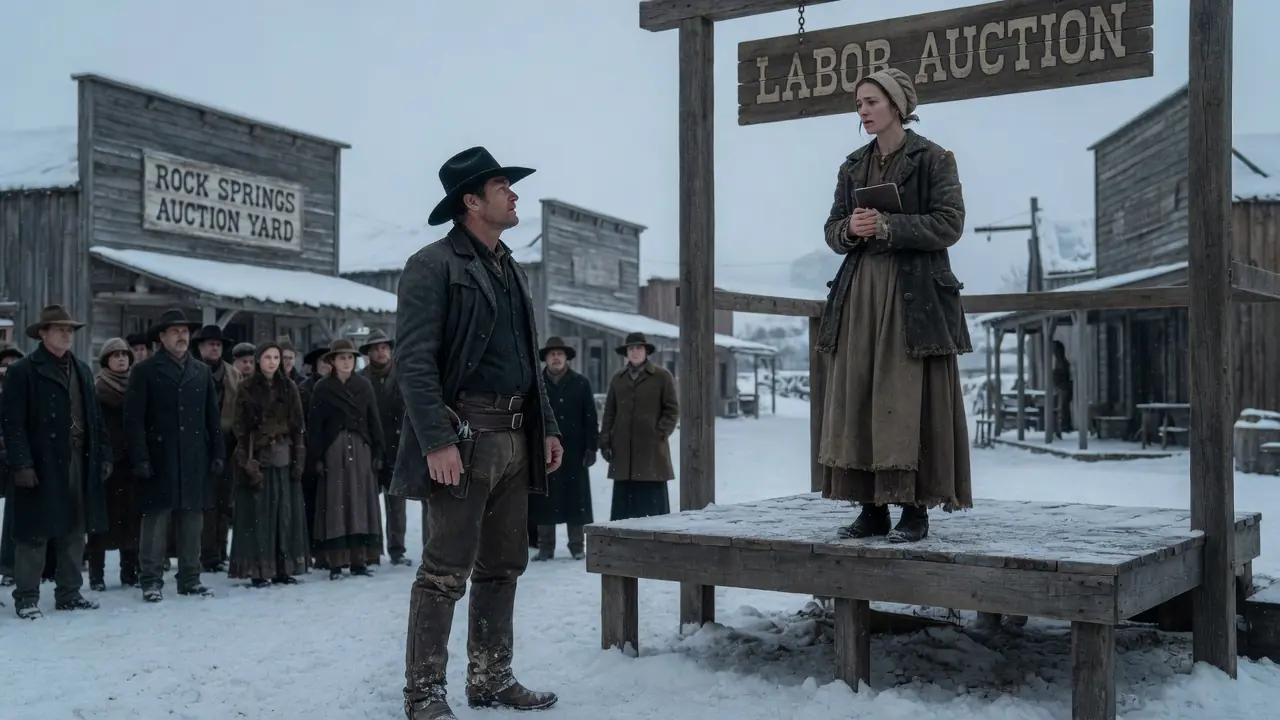
And somewhere in that soil, something had started to move that had nothing to do with roses.
Morning came with trouble. A horse ran hard up the track before the sun had fully cleared the ridge. Hank Dawson swung down, face pale under dust.
“My cattle are dropping,” he said. “Half the herd won’t stand.”
Jacob’s jaw tightened.
Anna stepped forward. “I’ll ride with you.”
They rode out together. The pasture told its own story. Fifteen heads scattered across dry grass, breathing shallow, eyes dull. The smell hung heavy.
Anna knelt beside the nearest animal. Pressed her thumb to its gum, counted under her breath. Too slow.
She walked to the creek, scooped water, brought it to her nose. Her mouth pressed flat. She followed the bank upstream.
Jacob watched her disappear into willow brush. Then she returned with a dark smear on her forearm.
“Dead elk in the creek,” she said. “Water’s fouled.”
Dawson stared.
Anna was already unpacking her satchel. Charcoal, yarrow, tin cup. She moved without hurry, without doubt.
Jacob realized something then, heavy and quiet.
The woman no one claimed at auction had just stepped into a pasture full of dying cattle like she belonged there.
And for the first time since Margaret died, the ranch did not feel empty.
She worked for hours. By the end, the pasture smelled of sweat and charcoal instead of sickness. One calf lifted its head.
Jacob watched, unmoving.
That night, he opened Margaret’s sewing room. Sat in her rocking chair. Later, Anna joined him outside. They did not speak at first.
After a long silence, he said, “She would’ve liked what you did with that garden.”
“I didn’t do it for Margaret,” Anna said.
“I know.”
Later, he asked, “You planning on leaving?”
“I was,” she said. “After the cattle.”
“And now?”
“But I don’t plan on it now.”
The story continues the same way through seasons of work, silence, judgment, and rebuilding.
A church Sunday came. Whispers followed Anna. Jacob heard them but did not react. Anna did not defend herself either. She simply kept moving, helping, working.
At Dawson’s ranch, a child fell sick. Anna treated him through the night with steady hands until the fever broke. No praise was asked for, no reward expected.
Back on the ranch, Jacob opened the door he had kept shut for three years. He began to let Margaret’s memory exist without being trapped in it.
One evening, he brought Anna gloves from town without explanation. She wore them without comment. The space between them slowly changed, not by words, but by what they stopped withholding.
When winter warning came early, the ranch had already become different. Doors open. Work shared. Silence no longer heavy.
Then came a man from town with a sick child again. Anna left without hesitation. Jacob followed. When they returned, nothing needed to be said.
That night, Anna said quietly, “I was planning to leave.”
Jacob didn’t answer right away.
Outside, frost had begun to form at the edges of the yard.
“But I don’t now,” she said.
The walnut box came later.
Inside: a ring, a brooch, folded deeds.
“You’re giving me Margaret’s life,” Anna said.
“I’m giving you what’s left of mine,” Jacob replied.
“I don’t need replacing,” she said. “I need building.”
He nodded.
“I know.”
They did not rush anything after that.
The ranch changed slowly, not into something new, but into something lived in. The garden returned. The house softened. The silence became comfortable instead of empty.
One evening, they sat on the porch. No words needed.
Jacob took her hand once.
Anna held it back once.
And the ranch, after everything it had lost, finally stayed quiet in a way that felt like peace.