By the third week of July, people had started slowing their trucks when they passed the Callahan farm.
Most did not stop.
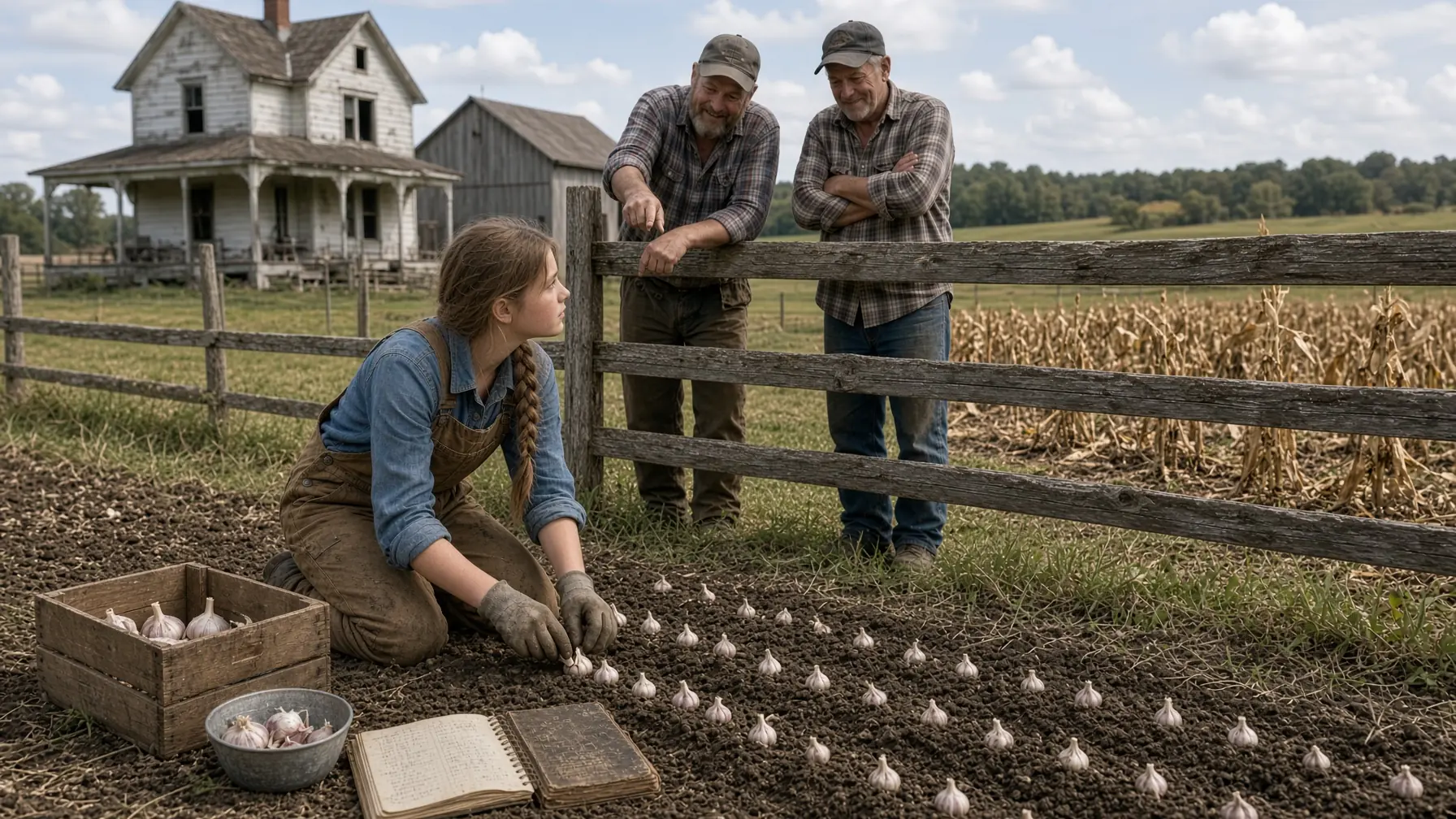
They simply lifted their foot from the gas long enough to look across the ditch, past the leaning white farmhouse and weather-gray barn, toward the vegetable patch running along the eastern fence.
That was where thirteen-year-old Sadi Callahan spent nearly every evening.
Kneeling in the dirt.
Braid hanging over one shoulder.
Cheap spiral notebook open beside her.
And six dense green rows stretching along the fence in a pattern nobody understood.
The comments came from everywhere.
The feed store.
Church parking lots.
Truck windows.
Men who had been farming longer than Sadi had been alive seemed particularly offended by the sight.
“Building yourself another fence inside the fence, Sadi?”
“Planning to feed the bugs something special?”
“Walter know what you're doing to his garden?”
Sadi rarely answered.
That seemed to irritate people more than if she had argued.
She would simply push her braid out of the way, make another mark in the notebook, move three feet down the row, and continue counting.
Leaves.
Damage.
Clusters.
New growth.
Then she would write a date beside the numbers.
Sometimes Dale Hargrove slowed his pickup almost to a crawl just to laugh.
Dale farmed eighty acres farther down the road and had never met a silence he couldn't improve by filling it with his own voice.
One evening he leaned halfway through the open truck window.
“How’s the miracle working?”
Sadi looked up.
Dale smiled.
She looked back down at the plant in front of her.
That bothered him.
“Girl thinks she’s discovered farming.”
Sadi still said nothing.
Dale drove away laughing.
Walter Callahan had watched the whole thing from the porch.
He waited until the truck disappeared.
Then called across the yard.
“You planning to answer him eventually?”
“No.”
“Why not?”
Sadi tied a red piece of yarn around a bean stem.
“He likes hearing himself.”
Walter nodded.
“Hard to argue with that.”
Then he went back inside.
That summer, nobody in eastern Kentucky needed help finding something to worry about.
Spring had been too dry.
June brought heat without enough rain.
Then came two straight weeks of humidity that seemed to wake every insect hiding in every hollow.
Bean leaves disappeared first.
Japanese beetles chewed through them until the green tissue looked like lace.
Aphids gathered beneath tender leaves.
Cutworms took seedlings at ground level.
Flea beetles peppered young plants with tiny holes.
Squash bugs settled beneath vines.
Everywhere people turned leaves over and found something eating the underside.
At Wexford Feed & Seed, shelves that normally carried insecticide well into August were stripped bare by Thursday afternoon.
People bought whatever remained.
Sprays.
Dusts.
Sticky traps.
Soap mixtures.
Neem oil.
Anything with a label promising fewer bugs tomorrow than today.
Still, garden after garden along the back roads grew thinner.
For some families, losing a vegetable patch was frustrating.
For others, it meant practical loss.
Fewer beans canned.
Fewer tomatoes put away.
Fewer jars on pantry shelves in January.
Walter Callahan belonged to that second group.
He was sixty-eight years old and had worked the same sixty acres since before Sadi’s mother was born.
The farm had never made him wealthy.
It had made him stubborn.
Weather-aware.
Suspicious of debt.
Capable of repairing machinery manufacturers had assumed should have become scrap twenty years earlier.
Walter could rebuild a mower carburetor with parts most people would throw away.
He could look at clouds over Coldwater Creek and tell Sadi whether rain was worth waiting for.
He could walk through beans without touching a leaf and know from the color whether they needed water.
But that summer even Walter looked worried.
He did not say so.
Sadi noticed anyway.
She saw him turn leaves over twice a day.
Saw him crush beetles between his fingers with more anger than necessary.
Saw him stare at bare spots where seedlings should have been.
Saw him calculate the cost of another planting without ever pulling out paper.
And she saw him at the feed store one Saturday morning holding an empty insecticide bottle while the clerk explained the next shipment might come Tuesday.
“Maybe Wednesday.”
Walter looked at the shelf.
Then at the new price tag.
It had gone up again.
He put the empty bottle down.
Sadi saw that too.
Outside, Dale Hargrove leaned against his truck talking to Roy Mercer.
“Callahan!”
Walter kept walking.
“You lose those beans yet?”
“Not all of ’em.”
Dale grinned.
“Give it time.”
Roy laughed.
Walter did not.
Then Dale noticed the small mesh sack Sadi carried.
“What’s she got?”
Walter glanced toward his granddaughter.
“Ask her.”