At three in the morning, the briefing room smelled like stale coffee, canvas gear, and recycled air. Senior Chief Marcus Hale stood in front of the operations board with his arms folded, studying the names of the people assigned to his team. At forty-one, Marcus had spent most of his adult life working in places where hesitation could turn a manageable problem into disaster. He trusted preparation, discipline, and experience—and the photograph pinned in the upper-right corner of the board seemed to offer only one of those things.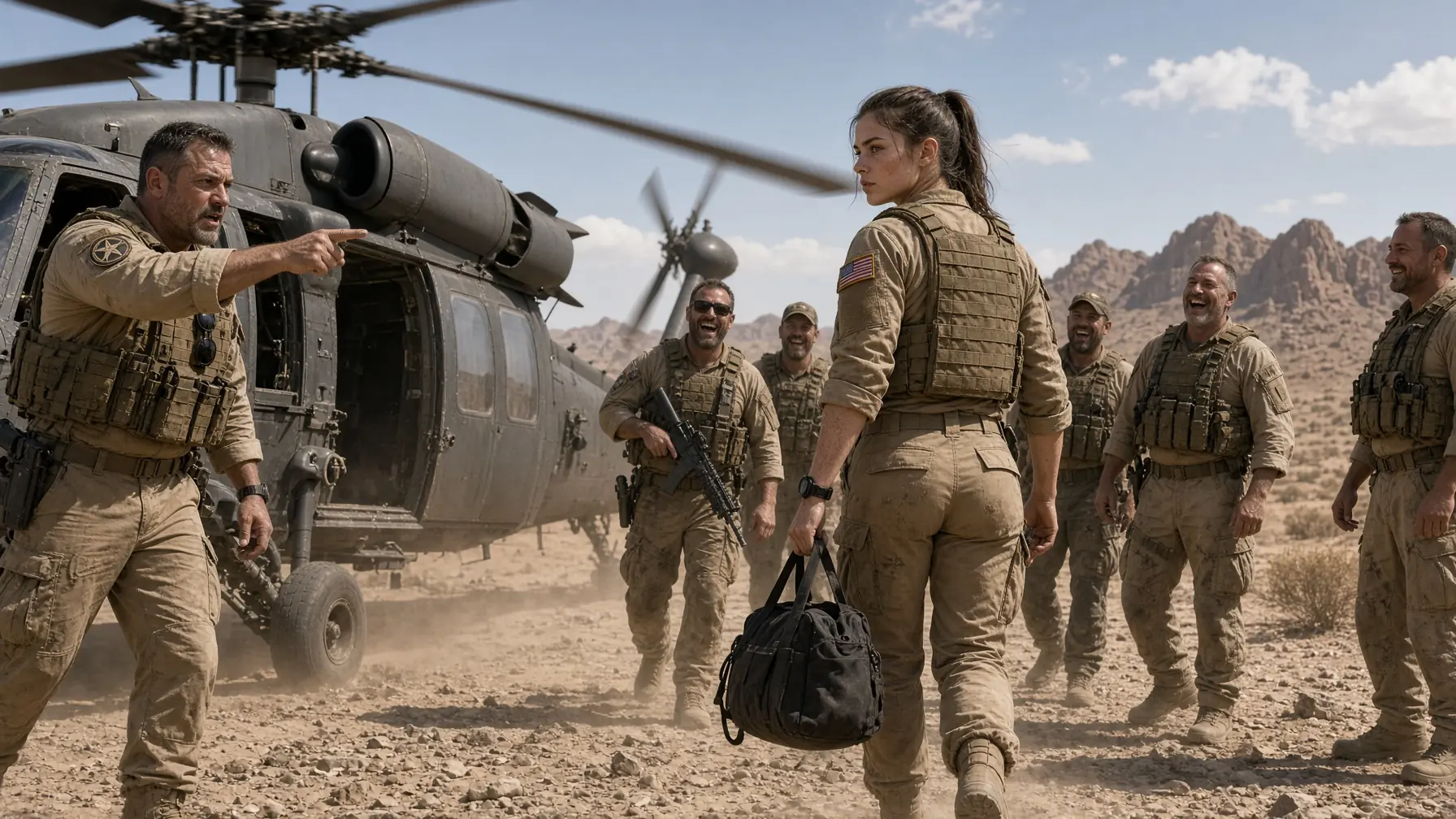
Emily Carter. Age twenty.
Marcus read the line again.
Her training scores were exceptional. Her instructors described her as unusually calm, patient, and technically gifted. She had performed at the top of her class under every controlled evaluation placed in front of her.
But there was one number Marcus could not ignore.
Zero real deployments.
Behind him, Cole Brennan, one of the oldest men on the team, walked closer and studied Emily’s photograph.
“That her?”
Marcus nodded.
Cole laughed.
“She looks like she should be asking permission to stay out past midnight.”
Two men behind him chuckled.
Marcus did not.
But he did not defend her either.
“She earned the slot.”
Cole raised an eyebrow.
“In training.”
Marcus turned toward him.
“I know.”
That was the problem.
Training could create habits. It could expose weakness. It could teach somebody to perform under carefully manufactured stress.
But training could not recreate uncertainty.
Marcus had watched brilliant people freeze the first time events stopped following the plan. He had seen average performers suddenly become extraordinary because they could think while everyone else panicked.
There was no test score for that.
The briefing-room door opened.
Conversation stopped.
Emily Carter walked inside.
She was younger-looking in person.
Slim but athletic, with fair skin, sharp hazel eyes, and dark-brown hair pulled tightly away from her face. She wore her field uniform neatly, carried a black equipment bag in one hand, and moved with the controlled quiet of someone who had already noticed every pair of eyes in the room but had decided not to acknowledge them.
Cole looked toward Marcus.
Then back at Emily.
“You lost?”
Emily stopped.
“No.”
“This is Hale’s team.”
“I know.”
Cole smiled.
“Briefing room for experienced personnel is down the hall.”
Several men laughed.
Emily looked directly at him.
“I’ll let them know you wandered in here.”
The laughter stopped.
One man coughed into his fist to hide a smile.
Cole’s expression hardened.
Marcus almost did the same.
Instead, he pointed toward an empty chair.
“Sit.”
Emily did.
No argument.
No attempt to impress anyone.
Marcus continued the briefing.
The upcoming exercise involved locating a missing evaluation team across an enormous desert training area after communications had failed during a simulated emergency. The assignment was intentionally difficult. Information would be incomplete, routes would change, and several staged complications had been built into the scenario.
Emily listened.
She did not interrupt.
She took notes.
That interested Marcus.
Young high performers often wanted everyone to know they understood.
Emily appeared more interested in understanding than being seen understanding.
After the briefing, Marcus stopped her before she left.
“Carter.”
She turned.
“Yes, Senior Chief?”
“You know why everybody in that room is looking at you?”
“I’m twenty.”
“And?”
“I’m new.”
“And?”
Emily thought.
“They think somebody selected me because my scores looked good on paper.”
Marcus nodded.
“Did they?”
“No.”
The answer came without hesitation.
Marcus stepped closer.
“You have never worked under conditions like this.”
“No.”
“You have never been responsible for people when there isn’t an instructor ready to stop the exercise.”
“No.”
“You understand that?”
“Yes.”
Marcus studied her face.
No defensiveness.
That bothered him less than confidence would have.
“Then why are you here?”
Emily looked toward the now-empty room.
“Because somebody decided I was ready to learn what training can’t teach.”
Marcus almost smiled.
“Careful.”
“About what?”
“That sounded intelligent.”
Emily picked up her bag.
“I’ll try not to do it twice.”
Then she walked away.
They departed before sunrise.
The desert looked almost peaceful from the helicopter.
Emily sat near the open side of the cabin with her hands folded around the straps of her equipment bag while the experienced members of the team communicated with casual familiarity. Jokes passed between men who had worked together for years.
Emily remained outside that rhythm.
Nobody was openly hostile.
That almost made it worse.
She was tolerated.
Not trusted.
When the helicopter touched down, dust swept across the landing zone.
Marcus jumped out first.
The others followed.
Emily was last.
Cole looked toward her as she approached.
“You keeping up, rookie?”
Emily adjusted her bag.
“So far.”
“Day hasn’t started.”
“It started three hours ago.”
Cole looked at Marcus.
“She always like this?”
Marcus answered:
“Unfortunately.”
For the first several hours, the exercise remained uneventful.
They moved through broad, broken desert terrain while receiving periodic updates from the control team. Emily performed every assigned task correctly.
Nobody cared.
Correct was expected.
Marcus noticed something else.
Emily kept studying the landscape.
Not casually.
Constantly.
She watched ridges.
Drainage channels.
Rock formations.
Vegetation.
Places where the ground changed color.
At one point Marcus stopped beside her.
“What are you looking at?”
“Terrain.”
“I gathered that.”
Emily pointed toward a distant ridge.
“The map shows a dry wash running behind it.”
“Yes.”
“I don't think it’s where the map says anymore.”
Marcus frowned.
“Why?”
“Last season's storms.”
Cole overheard.
“You predicting geology now?”
Emily ignored him.
She showed Marcus the map.
“The vegetation pattern bends farther east.”
Marcus looked.
It was subtle.
He might not have noticed.
Emily continued.
“If the wash shifted, our planned return route could be slower.”
Marcus folded the map.
“We’re following the approved route.”
“Yes.”
“You disagree?”
“I think we should remember the possibility.”
Marcus stared at her.
Then nodded.
“Fine.”
Cole shook his head.
“College kids.”
Emily looked at him.
“My grandfather taught me that.”
Cole laughed.
“Your grandfather teach geography?”
“No.”
“What then?”
“Farmed land where a creek moved every spring.”
Cole had no response.
Emily’s grandfather, Samuel Carter, had never worn an impressive title.
He owned sixty acres in northern Georgia and spent most of his life repairing fences, growing hay, fixing engines, and teaching his granddaughter that landscapes told stories if you stopped walking long enough to look.
When Emily was twelve, he took her into the woods behind his property.
“Where’s north?”
She pointed.
Samuel shook his head.
“Don't guess.”
“I know.”
“You think you know.”
He made her wait.
Sun.
Moss.