The morning Emily Carter opened the poultry gates, five hundred chickens poured into her family’s apple orchard like a living brown-and-white river.
For several seconds, the sight was almost beautiful enough to make her forget what was at stake. The birds rushed beneath the first rows of apple trees, wings flicking, feet scratching at the wet grass, voices rising in an excited chorus that rolled through the orchard. The ground was still dark from the night’s rain. Water clung to the leaves. A low mist hung beyond the windbreak. The hens moved anyway.
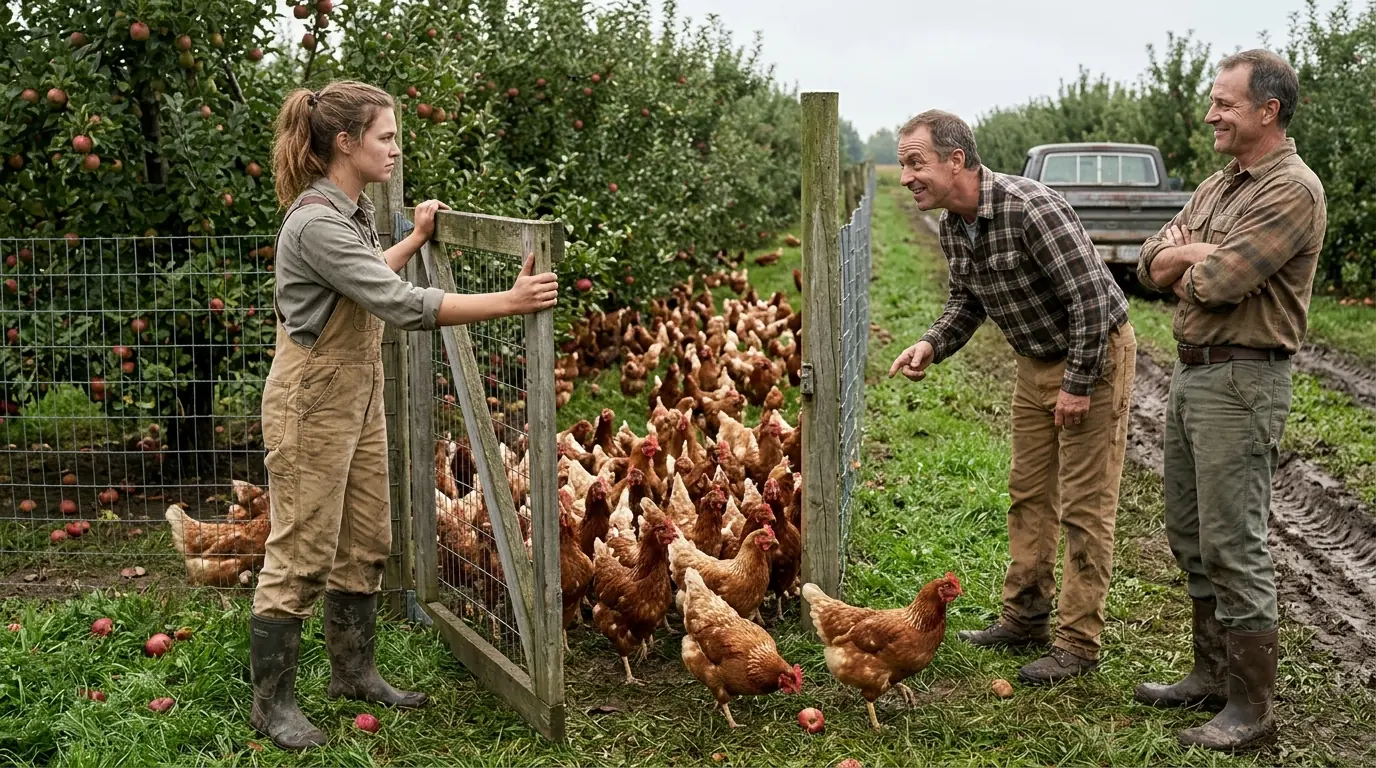
Emily stood with one hand on the gate and the other gripping a clipboard beneath her arm. At twenty-four, she had already learned that a farm could make a person feel both older and younger than they were. Older when bills arrived. Younger when older growers looked at her like she was borrowing adulthood for the afternoon.
Her father, Daniel Carter, stood several yards behind her in a faded work jacket, watching the flock disappear between the rows.
“You’re really doing it,” he said.
Emily glanced back. “You helped build the fencing.”
“That doesn’t mean I believed you’d open it.”
She smiled. “You know me better than that.”
Daniel looked toward the orchard, then toward the sky. The clouds had already begun stacking in the west again. This summer had produced rain with the persistence of a bad debt. Every time the soil started to firm, another storm crossed the county and softened it again.
The orchard had taken the punishment first. Lanes between the rows had become deep brown channels where tractor tires sank and spun. Fallen apples that should have been collected quickly sat beneath the trees and softened. Insects found them. Mold found some. Workers needed more time to clear what machines could not reach without tearing the soil apart.
The poultry operation had its own problems. Feed bills had climbed. The hens were healthy, but purchased grain was expensive enough that each delivery felt personal.
Emily had stared at the two sets of expenses for weeks before the thought that now looked ridiculous to half the county had begun to look obvious to her.
The orchard had food on the ground.
The chickens needed food.
The orchard had insects.
The chickens ate insects.
The orchard needed less traffic on wet soil.
The chickens weighed less than a tractor.
It was not a complete solution. She knew that. Birds could damage ground if concentrated too long. They could scratch around shallow roots, strip vegetation, foul areas around water, and create their own disease risks if managed poorly. But Emily was not proposing to leave five hundred hens in one block until the orchard looked like bare dirt.
She had divided the acreage into temporary paddocks with portable fencing. The flock would move. Water stations would move. Shade structures would move. She had mapped the rotation against the sections with the worst fallen-fruit load and the heaviest insect pressure.
She had also written down what would make her stop.
Visible bark damage.
Root exposure.
Excessive bare soil.
Bird stress.
Water contamination.
Any increase in fruit damage on the trees.
Daniel had read the list the night before and nodded once.
“You’re treating it like an experiment.”