The real estate agent called it forty-three acres of wooded recreational land.
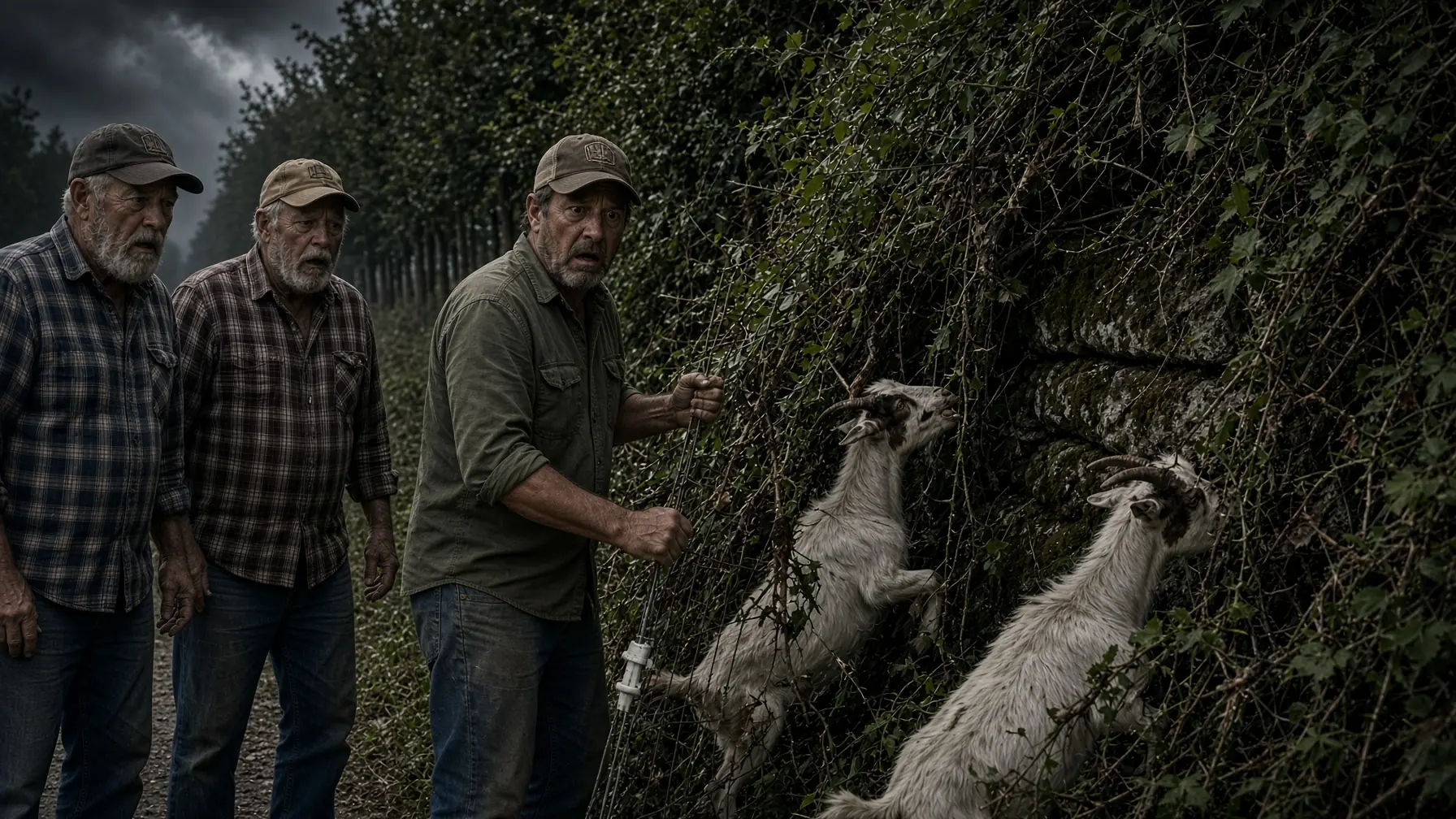
Caleb Reed called it the only land he could afford.
His neighbor called it something else.
“A problem.”
Everett Sloan stood beside his battered utility vehicle and stared across the road at the property Caleb was thinking about buying.
From where they stood, there was barely any land visible at all.
Only vegetation.
Multiflora rose had grown into tangled walls taller than a pickup.
Bush honeysuckle filled every opening beneath the trees.
Wild grapevine hung from branches like ropes.
Locust saplings, blackberry canes, poison ivy, and young maples had woven themselves together so tightly that walking through the property required pushing, cutting, ducking, and occasionally crawling.
There was no pasture.
No visible driveway.
No open field.
No usable barn.
No obvious water source.
Everett looked at Caleb.
“You own a bulldozer?”
“No.”
“Track loader?”
“No.”
“Forestry mulcher?”
“No.”
Everett nodded slowly.
“Then you're not buying land.”
Caleb waited.
“You're buying forty-three acres of thorns.”
Caleb looked across the hillside again.
Everett had lived there forty-six years.
He had watched the Hensley property disappear.
First the lower field.
Then the lane.
Then the hillside.
The woman who had owned it, Ruth Hensley, had kept it open for most of her life with an old Ford tractor and a five-foot mower.
But age had eventually defeated her.
Her knees went bad.
Then her eyesight.
The tractor stayed in the shed.
The fields stopped being cut.
And nature moved faster than anyone expected.
After Ruth died, the property went to relatives living out of state.
None wanted it.
The first asking price had been thirty-nine thousand dollars.
Nobody bought.
It dropped to thirty-one.
Then twenty-six.
Finally—
Twenty-two thousand dollars.
Just over five hundred dollars an acre.
Cheap enough to attract Caleb.
Overgrown enough to scare everyone else away.
Everett pointed toward the hillside.
“A contractor looked at this place last year.”
Caleb glanced at him.
“Said eighteen thousand just to open the lane and clear ten acres.”
Caleb whistled softly.
“And that's before fencing.”
“I know.”
“And after you clear it, all that rose comes back.”
“I know.”
Everett studied him.
“You keep saying you know.”
Caleb smiled slightly.
Everett frowned.
“What?”
Caleb pointed toward the wall of green.
“That brush has leaves.”
Everett stared at him.
“Most plants do.”
“My goats eat leaves.”
There was a pause.
Then Everett laughed.
Not because the joke was good.
Because he realized Caleb wasn't joking.
“You cannot turn goats loose in that mess.”
“I’m not turning them loose.”
“Then what?”
“Small paddocks.”
Everett stared.
“In there?”
“Yes.”
“You're going to buy forty-three acres of weeds…”
He pointed toward Caleb.
“…so your goats can eat their way through it?”
Caleb looked at the hillside.
Then said the sentence Everett would remember for years.
“I'm not buying pasture.”
He smiled.
“I'm buying feed that hasn't been cut yet.”
Everett shook his head.
“Feed usually doesn't fight back.”
Caleb Reed was thirty-nine years old.
He owned sixty-seven breeding does, three bucks, and two livestock guardian dogs.
What he did not own was land.
For nine years, Caleb had raised goats on twenty-eight rented acres while working four days a week repairing diesel equipment at a trucking company outside Union, West Virginia.
Every spring he told his wife Laura the same thing.
“One more year.”
One more year of saving.
One more kidding season.
One more year paying somebody else's lease.